Why Valley Interior Systems brings a consistent approach to all projects
Commercial construction faces sustained pressure. Schedules tighten while workforce availability varies across markets. Projects are becoming increasingly complex, especially in regulated, technically demanding sectors, yet owners still expect firm control over costs and certainty. Contractors with multiple regions and service lines now succeed by executing consistently without fragmentation. At Valley Interior Systems (Valley), this reality shapes how the business handles growth, investment, and delivery.
Founded and headquartered in Cincinnati, Valley delivers specialty construction services across Ohio, Kentucky, and Tennessee. The team self-performs interior construction, exterior systems, preconstruction coordination, and prefabrication for healthcare, education, commercial, industrial, data center, civic, and multifamily projects. With more than 40 years in business, seven regional offices, and a workforce built for hands-on execution, Valley operates at a scale where operational alignment shapes results on every project.
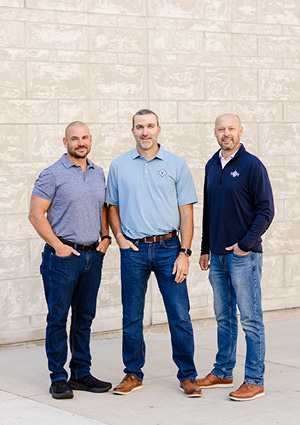
A strong leadership structure backs up that alignment by turning standards into consistent delivery. Jeremy Turi, Chief Operating Officer, oversees operations across regions and service lines, linking field execution with planning, modeling, and prefabrication. Instead of simply setting the vision, Jeremy ensures Valley’s approach remains cohesive as work volume, geography, and technical needs grow.
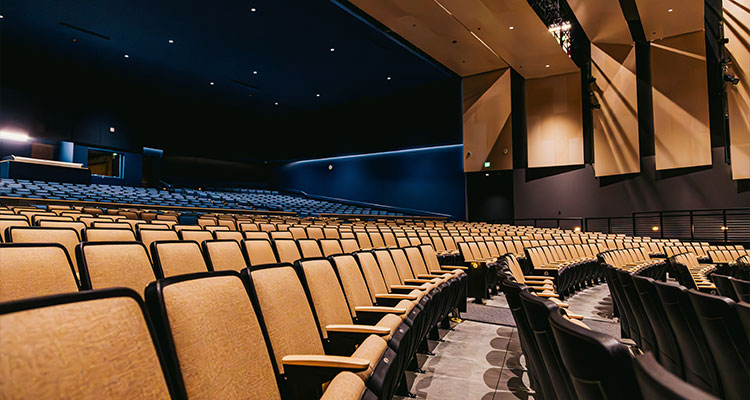
“At Valley, we bring the same high standard to every project. Whether that is a hospital, a data center or something else, we take pride in bringing the best solutions in quality and delivery with an aim to exceed expectations,” Jeremy explains.
That approach has governed how Valley’s service offering has broadened over time. Its foundation remains interior construction, including drywall, metal framing, finishing, acoustic systems, doors, frames, and hardware. Exterior cladding capabilities expanded steadily in response to client demand, adding metal panels, fiber cement systems, EIFS, and insulated assemblies. Clean room and dry room construction introduced additional coordination requirements tied to precision and sequencing. Rather than treating these scopes as separate businesses, Valley structured its operations to support integration across disciplines.
Operations became the mechanism for that integration. Shared safety programs, centralized planning practices, and consistent regional leadership frameworks allow Valley to manage variation without undermining execution. For clients, the benefit is predictable delivery across different building types. For Valley, it creates a platform for measured expansion.
That same discipline informs Valley’s regional growth strategy. It highlights establishing durable market presence rather than pursuing isolated projects; in 2025, Valley expanded into Northeast Ohio, establishing its seventh branch location. “The opening of Valley Cleveland represents the resources, innovation and operational strength we bring. We are in a prime position with the ability to both scale and be agile to individual market needs.” Jeremy notes.
From an operational standpoint, market expansion is focused on continuity. The existing operational framework, safety standards, scheduling systems, and quality controls enables early momentum and lasting success. “Our plan is to continue growing regionally and create opportunities for employees. We want to build roots and communities, not just move from one job to the next,” Jeremy points out.
Enhancing efficiency
Growth has changed how Valley delivers work. Prefabrication is no longer treated as a supplemental capability but as a core component of project execution. Offsite manufacturing allows assemblies to be produced in controlled environments, improving coordination, reducing congestion, and supporting schedule certainty. Capacity continues to develop to support projects across multiple regions, aligning closely with field operations.
Technology anchors how Valley delivers. It uses HP SitePrint robots to transfer digital layout data right onto concrete slabs. Automated layouts replace the manual processes that often introduce variability and removes delayed project starts. “With robotic layout, we’re working up to ten times faster than traditional methods and reducing human error. That gives us a more reliable foundation for every part of the build,” James explains.
Beyond layout automation, Valley has invested in in-house BIM and VDC resources that support constructability review, coordination, and prefabrication. Laser scanning captures existing site conditions and feeds data straight into planning before fabrication or installation starts. These tools help operations by reducing risk and boosting accuracy upfront. For field teams, they make execution easier by reducing conflicts and rework. “Our approach to automation centers on empowering our workforce. These tools free up field teams to focus on installation, problem-solving, and craftsmanship,” Jeremy shares.
Valley’s complex projects show these systems in action. At the Ohio State University Wexner Medical Center, the team handled interior construction in busy healthcare facilities for seven years, with deep involvement from the earliest preconstruction phases. Early teamwork let Valley and GC partners plan sequencing, materials, and access strategies well in advance. “During the seven-year project, we got involved early with our GC partners to align on solutions and products from the start,” Jeremy recalls.
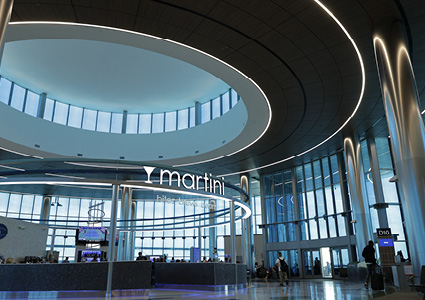
That model carries into other sectors where access, uptime, or regulatory requirements demand careful planning, like BNA Concourse D. Other civic projects such as the Gahanna Municipal Complex demonstrate Valley’s ability to coordinate interior and exterior systems within architecturally driven designs. Other work requires custom solutions, including engineered above‑ceiling support systems developed with designers and engineers to accommodate specialized installations.
Data center construction is now a regular part of Valley’s business, even though many projects stay confidential. Valley built this expertise well before the market accelerated. “We built our first data center about 16 years ago, so when the market expanded, we already had the experience,” Jeremy reflects.
Valley’s presence in central Ohio, combined with its prefabrication and coordination capabilities, positioned it to support repeat data center programs as development moved into surrounding states. Schedule sensitivity and interface management continue to shape the delivery approach in that sector.
Developing people
Workforce development supports each of these efforts. Valley reports long employee tenures across leadership, management, and field roles. Retention influences how it approaches expansion, succession planning, and service diversification. “If we don’t create opportunities, people will leave. Finding growth paths, whether regional, through new scopes, or new services, helps us keep people who already fit our culture,” Jeremy explains.
To support that goal, Valley launched Valley University, its in-house training and development initiative designed to prepare employees for bigger roles as the company grows. “Developing leaders can take five to ten years. We want to shorten that timeline to three to five years,” Jeremy says.
Safety remains embedded across operations and workforce development. Valley participates in peer reviews and industry safety evaluations, aligning safety programs with execution planning and leadership accountability.
As Valley looks ahead, its direction centers on controlled regional growth, disciplined execution, and systems that allow the business to scale without dilution. Investments continue to focus on improving coordination, workforce capability, and delivery reliability. The focus remains on building the operational structure required to perform consistently as project complexity and market demands continue to evolve, while maintaining a strong culture with the integrity and quality that it has become known for.