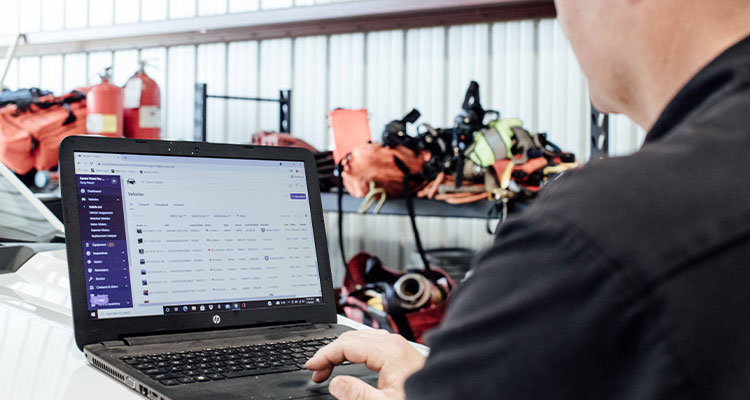
Why AI-powered maintenance is a leadership test, not a technology one
Though fleets now have access to more data than ever before, technicians and fleet managers often feel as though they are fighting fires instead of preventing them, spending their time responding to urgent issues rather than building resilient systems that ensure proper preventive maintenance (PM) schedules and appropriate issue prioritization. Nowadays, one big solution for this challenge is that companies simply “need AI,” as though advanced technology alone will close the gap; however, the reality, especially in fleet, can be far more nuanced.
Construction fleets are not facing an AI problem so much as they are confronting deeply rooted operational and maintenance challenges that AI can be used to help with.

The data is there, but the transformation isn’t
For years, fleet-based industries, including construction, have been told that digital transformation would solve their maintenance challenges, and the latest technology on the block is AI. In practice, however, many early AI solutions felt impractical, with models operating as black boxes, systems being fragmented, data living in separate platforms for telematics, maintenance, fuel, and procurement, and the technical barrier to extracting meaningful insights was high.
For a manager responsible for keeping a multimillion-dollar fleet of assets operational across regions, that complexity became another burden. Instead of clarity, there was more noise, so teams defaulted to what they knew: experience, intuition, and reactive problem-solving. The issue was never a lack of intelligence or effort. It was that the technology was not embedded where leaders actually work.
Maintenance is the strategy, AI is the tool
The construction industry and its assets run on the expertise of seasoned technicians and fleet managers who know the sound of an engine that’s about to fail. Regional fleet leaders understand which assets struggle in extreme conditions and how to balance uptime with safety and compliance. AI in fleet does not replace that knowledge; rather, it strengthens it.
Construction fleets operate in dynamic, high-risk environments, and any decision can impact project timelines and worker safety. Because fleet leaders have this real-world context, they’re seeking out AI that is purpose-built for the complexities of their fleets and that is embedded directly into daily workflows. As fun (or scary) as they can be, fleets don’t need chatbots. They need something that solves operational problems. Practical intelligence, or AI that’s actually useful, is something fleets have a growing interest in. According to a 2026 fleet benchmark report, 53.3 percent of fleets are either researching AI use or already piloting it.
Why this is a leadership test
When AI-powered maintenance is embedded directly into daily workflows, such as managing which assets should be prioritized for service based on issues, or if all service tasks should be approved when an asset is in the shop, it transforms from an experimental technology into a leadership decision. For a fleet manager, that might mean seeing patterns across regions that were previously invisible, like recurring failures tied to a specific asset class, PM intervals that are misaligned with real-world usage, or vendor performance discrepancies that affect uptime.
For a lead technician, it could mean surfacing likely causes of repeat issues based on historical repairs, identifying assets that are trending toward higher cost per hour, or prioritizing work orders based on risk, not just urgency. None of this replaces judgment. It enhances it.
“Leadership readiness becomes the true differentiator,” explains Reed Jackson, Senior Product Manager for AI Services at Fleetio. “Are leaders prepared to shift from reacting to yesterday’s breakdown to preventing next quarter’s downtime? Are they willing to standardize processes across jobsites so insights can scale? Are they focused on operational clarity rather than technological novelty? AI exposes the gaps in process, accountability, and visibility and, ultimately, addressing those gaps is a leadership challenge.”
From reactive firefighting to proactive strategy
Construction margins are tight, and equipment is expensive, while downtime is disruptive and highly visible. A single failed excavator can stall an entire job site. In reactive environments, maintenance decisions are driven by what is loudest, and strategic planning often gets pushed aside by urgent fixes.
When advanced analytics are embedded directly into maintenance management, something shifts. Visibility improves across the organization, and trends surface automatically within the tools leaders already use, making risk quantifiable instead of anecdotal. This enables a new type of conversation at the executive level. Instead of asking, “Why did this machine fail?” leaders can ask, “Which assets are most likely to impact project timelines next quarter, and what are we doing about it?” Instead of debating whether PM is “worth the downtime,” they can measure the long-term cost of deferring it. AI, in this context, is not an experimental feature; it’s infrastructure for better decision-making.
Differentiating AI philosophy in a crowded market
The construction technology space is filling quickly with AI claims, many of which highlight generative capabilities, chat interfaces, and predictive promises, but the real test is whether those capabilities are grounded in deep maintenance domain expertise. In short, purpose-built AI matters. When AI is layered onto a generic system, it often struggles with context. Construction fleets are not like delivery vans or passenger vehicles; they operate in extreme conditions, and usage patterns vary dramatically by job site and project type.

An AI philosophy rooted in maintenance management recognizes that complexity. It starts with a best-in-class maintenance platform and applies intelligence directly to real operational workflows. It focuses on solving maintenance problems rather than showcasing AI features. This approach aligns with what fleet leaders actually care about: uptime, safety, cost control, and scalability, and the right solution strengthens the expertise already inside the organization.
Strengthening the workforce, not replacing it
There is understandable skepticism around AI in construction. Crews and managers alike worry about automation displacing skilled labor or reducing human oversight. In reality, AI-enabled operations can strengthen the workforce by reducing manual data analysis, allowing maintenance teams to focus on higher-value tasks, surfacing insights automatically, and enabling regional leaders to spend less time compiling reports and more time improving processes. But human judgment remains central.
The path forward for construction fleet leaders
For fleet managers, VPs of operations, lead technicians, and site supervisors, the question is not whether AI will influence fleet operations. It already is. The real question is whether it will be treated as a novelty or as a strategic lever embedded into everyday maintenance decisions. AI-powered maintenance is ultimately a leadership test. It challenges organizations to unify fragmented systems, standardize processes, and commit to proactive strategies. It asks leaders to trust their expertise enough to enhance it with data-driven insight. And, when done intentionally, AI becomes less about technology and more about transformation. Not transformation driven by algorithms alone, but by leaders who choose to move from reactive problem solving to proactive, scalable strategy.
Rachael Plant is a senior content marketing specialist for Fleetio, a fleet maintenance and optimization platform that helps organizations run, repair, and optimize their fleet operations.