What Should Articulating Boom Crane Training Include? A Comprehensive Program Breakdown
Crane accidents on construction sites can halt operations, trigger regulatory investigations and cost companies millions in liability. However, many organizations still rely on generalized mobile crane training for operators handling articulating boom cranes or equipment with distinct mechanics that demand specialized instruction. Investing in a comprehensive training program specifically designed for knuckle boom cranes can help reduce workplace incidents, maintain OSHA compliance and protect both personnel and the bottom line.
Why Articulating Boom Cranes Need Specially Trained Operators
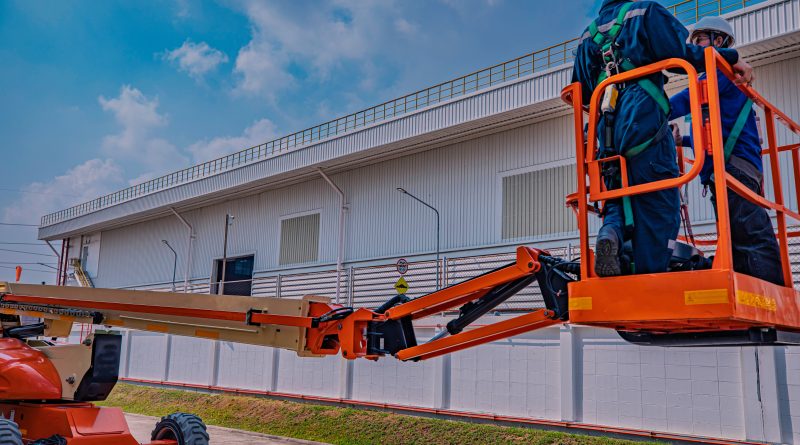
Articulating boom cranes feature hydraulic joints that allow the boom to bend or “knuckle” at multiple points, creating flexibility that standard telescopic cranes cannot match. This articulation enables operators to navigate around obstacles, reach over structures and position loads in confined spaces. However, these capabilities introduce complex load dynamics, shifts in the center of gravity and stability challenges that require specialized knowledge.
Standard mobile crane training may not adequately prepare operators for the unique demands of knuckle boom operation. The articulating joints change the crane’s lifting geometry throughout each movement, affecting load charts and capacity calculations. Operators must understand how each joint angle influences stability, recognize hazards specific to articulated lifting and apply techniques that prevent tip-overs, structural failures and load drops.
Meeting Core Regulatory and Compliance Standards
OSHA training and evaluation require employers to verify that operators are properly trained and evaluated before operating cranes on active worksites. These regulations mandate that operators demonstrate competency through both classroom instruction and hands-on assessment. Companies that fail to meet proper criteria risk citations, financial penalties and increased scrutiny during safety audits.
The ASME B30.22 standard provides specific safety guidelines for articulating boom cranes, covering design, inspection, testing, maintenance and operation. Training programs aligned with ASME B30.22 help operators understand manufacturer specifications, load chart interpretation and the operational limits unique to articulated equipment. Compliance with these standards can reduce liability exposure and demonstrate due diligence.
Unpacking Essential Elements of a Comprehensive Training Curriculum
High-quality programs blend theoretical knowledge with practical skills, creating operators who can apply technical concepts in real-world lifting scenarios. A well-designed curriculum addresses classroom fundamentals, hands-on operation and formal evaluation to confirm competency.
Classroom and Theoretical Instruction
Operators need a solid foundation in the technical principles governing the safe operation of articulating boom cranes. Classroom instruction typically covers load capacity calculations, load chart interpretation and the effects of boom angle, extension and articulation on crane stability. Students learn to account for dynamic loading conditions, such as wind forces and load swing, which can alter the crane’s center of gravity.
Understanding rigging devices, sling angles and connection methods is essential for proper load attachment. The required technical knowledge criteria outlined by OSHA specify that operators must be familiar with load charts, rigging equipment and the effects of dynamic loading. Theoretical instruction also addresses site assessment, including ground conditions, overhead obstructions and proximity hazards.
Hands-On Practical Operation
Physical practice with the crane transforms theoretical knowledge into operational competency. Trainees work with articulating boom equipment to develop muscle memory, refine control inputs and build confidence in maneuvering loads through complex paths. Hands-on sessions typically include crane setup, outrigger positioning, load attachment and controlled lifting and lowering exercises.
Operators practice navigating the boom through obstacles, managing multiple articulation points simultaneously and responding to shifting load conditions. Training with various attachments, such as winches, grapples or material buckets, exposes operators to the full range of equipment configurations they may encounter.
Operator Evaluation and Certification Preparation
A robust curriculum concludes with comprehensive evaluations that measure both theoretical understanding and practical skill. Written exams test knowledge of load charts, safety regulations and hazard recognition, while practical assessments require operators to execute lifting tasks under observation.
Evaluators verify that candidates can perform pre-operational inspections, calculate load capacities, communicate effectively with ground personnel and operate the crane safely. Programs that prepare operators for accredited certification exams, such as those administered by the National Commission for the Certification of Crane Operators, provide trainees with credentials recognized across the construction industry.
Top Articulating Boom Crane Training Programs
Identifying a credible training provider is a major pain point for construction leaders who need confidence that operators will be properly evaluated and prepared to perform safely in the workplace.
CICB
CICB delivers customized programs and instruction through subject matter experts who bring extensive experience operating cranes in construction, manufacturing, utilities and other industries. These instructors hold adult education certifications that distinguish them in the crane training industry, creating richer educational experiences through knowledge sharing and real-world insights.
Employers benefit from streamlined scheduling, which allows them to arrange multiple types of training at a single location in a single consolidated block of time. The organization’s staff size enables them to train operators and proctor certification exams independently. This combination of hands-on expertise and instructional credentials addresses the need for both theoretical foundation and practical application.
Key Features
- Subject matter experts with hands-on crane operation experience
- Customizable training programs tailored to workplace requirements
- Consolidated scheduling for multiple training types at one location
- Independent training and proctoring capabilities
360training

360training offers online training for knuckle boom cranes. The program covers crane anatomy, maintenance protocols, inspection procedures, common hazards and safe operation techniques. Course content includes rigging fundamentals and proper hand signaling for effective communication during lifting operations. Its courses are regularly updated to align with current OSHA standards, with immediate access upon purchase.
The platform meets the theoretical instruction component of comprehensive training by delivering classroom knowledge in an accessible online format. With over 4,000 courses across multiple industries and more than 1 million Department of Labor cards issued since 1997, the provider demonstrates experience in delivering regulatory-compliant training.
Key Features
- Practice quiz questions to prepare for final written exams
- Practical evaluation checklists for employers
- ANAB accreditation
- Over 1 million Department of Labor cards issued since 1997
Hard Hat Training
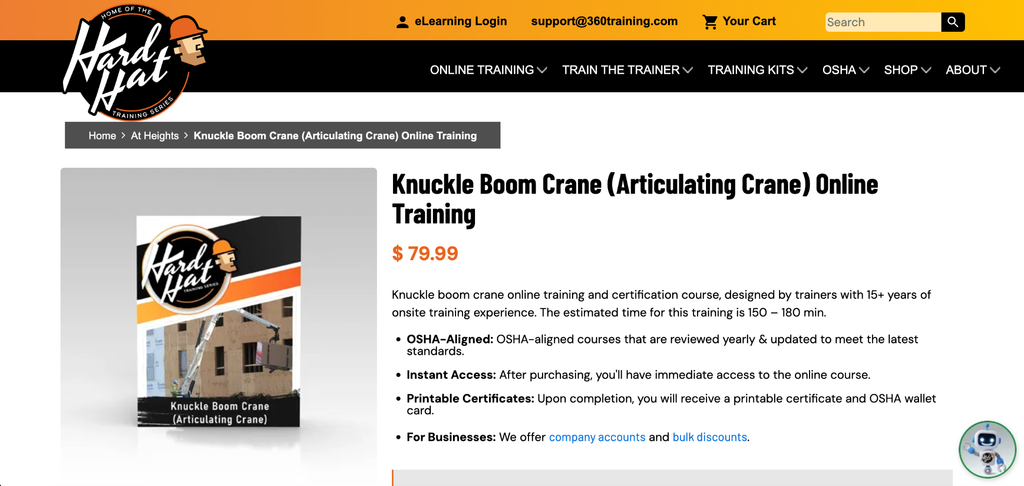
Hard Hat Training‘s knuckle boom truck online training delivers OSHA-aligned content that is reviewed annually and updated to reflect current standards. It is designed by trainers with more than 15 years of on-site instruction experience. The estimated completion time of the written material is 150 to 180 minutes. This provider addresses the classroom instruction requirement through interactive online modules that cover equipment anatomy, maintenance procedures, inspection protocols and hazard recognition.
The annual content review process helps maintain alignment with evolving OSHA standards. Downloadable practical evaluation checklists give employers the tools needed to complete the hands-on assessment component, supporting a complete training program that combines theoretical knowledge with workplace evaluation.
Key Features
- Intermittent practice questions throughout the course
- Downloadable practical evaluation checklists
- Company accounts with bulk pricing options
- An interactive learning format designed to improve information retention
Selecting Training Providers
The chosen providers met criteria that construction and industrial employers can use when evaluating articulating boom crane training options.
These include:
- Articulating boom crane specificity: The program addresses knuckle boom crane operation rather than relying only on generalized mobile crane instruction.
- Regulatory alignment: Training content supports employer responsibilities related to OSHA standards, operator qualification and workplace safety.
- Practical skill development: The provider offers or supports hands-on evaluation, practical assessments or workplace-based competency checks.
- Qualified instruction: Instructors or course developers demonstrate crane, rigging or safety training expertise relevant to real lifting environments.
- Employer usability: Programs support organizational needs such as team training, flexible delivery, documentation support or customized workplace application.
- Certification preparation: The provider helps operators prepare for applicable written and practical assessments where relevant.
Frequently Asked Questions About Articulating Boom Crane Training Programs
Understanding common questions about articulating boom crane training can help companies make informed decisions when evaluating programs and providers.
Who needs to be certified to operate a knuckle boom crane?
Operators using articulating boom cranes in construction work must be trained, certified or licensed and evaluated by the employer under OSHA 1926.1427. Industrial employers should verify applicable training, evaluation, equipment and workplace requirements for their specific operations.
What are the essential elements of a comprehensive training curriculum?
A complete program includes classroom instruction covering load charts, rigging principles and hazard recognition, hands-on practice with the equipment to develop operational skills and formal evaluation through written exams and practical assessments.
What are the core regulatory and compliance standards?
OSHA requires employers to verify operator training and competency before allowing crane operation. The ASME B30.22 standard provides technical guidelines specific to articulating boom cranes, covering design, operation, inspection and maintenance.
Prioritizing Operator Qualifications for Safe Lifting Operations
Selecting a credible training provider that delivers comprehensive instruction aligned with regulatory standards is an investment in workplace safety. Programs that combine classroom theory, hands-on practice and rigorous evaluation produce operators who understand the unique demands of articulating boom cranes. Construction and industrial leaders who prioritize operator qualifications position their organizations to reduce incidents, avoid costly penalties and maintain high safety standards.
*Please note that this list includes sponsored content. Some of the companies, products, or services featured have entered into commercial agreements for placement. Sponsored placements do not necessarily reflect an endorsement and should be considered alongside other options in the marketplace.