Two years into its 2024-2028 plan, Medcem is turning strategy into measurable results
At the Medcem Global Cement Group (Medcem) factory in Turkey, the trucks are being run in a refreshingly efficient way. Loaded with raw material at the quarry, which sits higher than the plant itself, they roll downhill and regenerate their own batteries along the way, arriving with enough charge to make the empty return trip uphill.
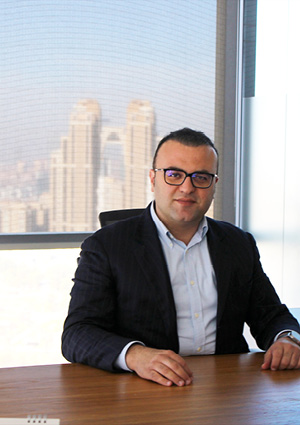
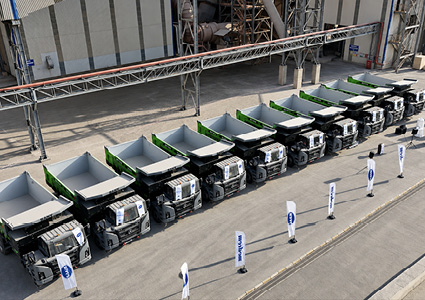
For the largest global cement exporter in a single location, this is a small detail, yet it perfectly encapsulates how CEO, Mehmet Ali Ceylan, is running the company through the third year of its 2024–2028 strategic plan – with efficiency and sustainability being the exact same investment. That logic now extends far beyond the quarry, most visibly in a new order for 60 electric trucks from Mercedes; one of the largest single electric truck deals the manufacturer has taken.
Mehmet sat down with us in 2025 to discuss Medcem’s five-year plan, and he returns today to reveal how the strategy is working out, alongside vertical integration, geographical expansion and decarbonization.
“As we touched on last year, the plan has two main strands. The first is quantitative growth, which breaks down into vertical integration, horizontal integration, increasing efficiency and strategical growth,” he begins. “The second is qualitative development, built around three pillars – sustainability, digitalization and organizational development. Since we last spoke, we’ve commissioned several new terminals and ready-mix plants and made new investments in the factory to increase efficiency and establish control over our raw material and logistics operations. We’ve also continued to improve efficiency through digitalization and kept investing in the development of our people, who remain our most important resource.”
Integrating operations
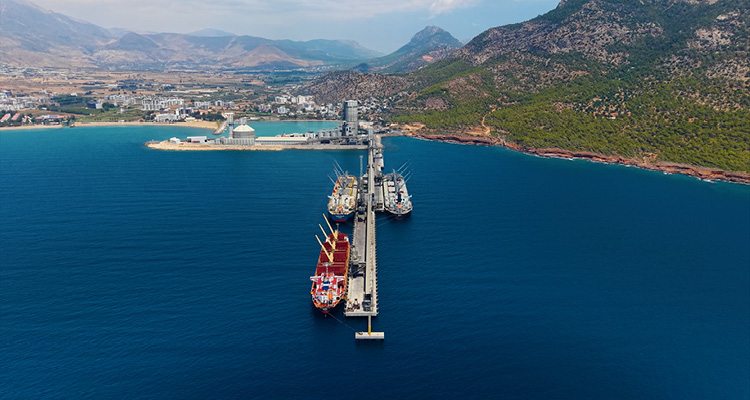
Medcem has significantly increased operational efficiency through vertical integration, which Mehmet says allows full control over the supply side, logistics or sales, and notably improves margins. “Vertical integration splits into backward integration and forward integration,” he explains. “Backward integration means controlling the supply side; forward integration covers distribution channels and the customer-facing side. On the backward side, we’ve taken control of the raw material quarrying operation at our factory with the electric mining trucks – a win for both sustainability and efficiency. We’ve also opened new quarries to supply supplementary raw materials that are important to our production, such as bauxite, iron ore and gypsum. We have our own port located 17 kilometres from the factory for exporting 85 per cent of our production abroad. The logistics operation between the factory and port is vertically integrated and managed via electrical trucks from Mercedes.
“Regarding forward integration, we used to sell purely on a Free on Board basis, without becoming involved in logistics beyond the port. However, over the past year we’ve chartered vessels and controlled 500,000 tons of sales through our own shipping team. We’d like to keep growing that shipping and vessel capability. None of this is our core business, but when we see the right opportunity in terms of margin and strategic advantage, we’re willing to move into it. We’re pleased with how vertical integration has developed across our operations, because it’s giving us a real edge on profitability.”
With terminals at Sheerness, serving London and the Southeast, Glasgow in Scotland, and Liverpool on track for commissioning in September, Medcem’s UK footprint is now complete. Mehmet reveals that further UK investment is likely, but the next move will be acquiring ready-mix businesses rather than building more terminals. In Europe, the group has both Antwerp in Belgium and Trieste in Italy up and running – however, the bigger growth story is in the US, where the company is investing in a new grinding facility, with a plan to commission in early 2027.
“The US market is strong and stable compared to Europe,” Mehmet highlights. “Demand is very robust because much of the country’s infrastructure is over 100 years old in places and it needs rebuilding. Data centres and new energy facilities to support AI are adding further demand, and housing remains a pressure point everywhere, including Europe. We’re already exporting three million tons a year to third-party customers in the US, and our quality and service have been proven in that market. We’re now considering opening our own terminals to sell directly, rather than solely through third parties.”
Improving efficiencies
When it comes to reducing the cement industry’s carbon footprint, Medcem has two ways of approaching it – first, enhancing the use of alternative fuels, switching to low-carbon electricity, improving energy efficiency, optimizing logistics and improving quality through R&D to reduce clinker content. The second covers measures that are more difficult to apply under current market conditions, which Mehmet elaborates on. “Carbon capture and utilisation systems, for example, are extremely capital- and operationally-intensive, and hydrogen-powered or fully electrified plants remain very expensive. We follow these technologies closely, through consultants, technology developers and industry partners, so that when market conditions allow, we’re ready to move.
“We’re increasing our use of alternative fuels, such as corn cobs, forest residues, refuse-derived fuels (RDFs), shredded tires and similar materials, and building a new alternative fuel feeding system for our kiln, operational from February 2027.” The group is also growing its renewable energy generation, with 20 megawatts of waste heat recovery across two production lines, 18 megawatts of solar capacity already in operation and a further 25 megawatts being secured imminently. “In addition, we’re applying AI to improve factory efficiency more broadly,” adds Mehmet. “This is an area we’re investing heavily in – digitalization isn’t just a slogan for us. We’re looking at every activity in the company – from running major equipment, to sustainability metric tracking, to customer service – through a digitalisation lens to explore how we can make it more efficient, more understandable, more analyzable and ultimately deliver a better outcome.”
Organic growth
As it keeps following the five-year strategic plan, Medcem is set to continue its terminal programme to reach the targeted coverage. “Once we have achieved this, we’ll build out logistics control further through shipping and carry on growing our ready-mix operations in every country in which we operate,” confirms Mehmet. With its sizeable factory in Turkey, the business is also looking to gain control of local, domestic factories to build local market coverage. “Ultimately, our ambition is to become a mid-sized global construction materials company, and taking over integrated factories is one of the key steps we plan to take in the next two to three years.”