The race to build data centers is heading into deeper waters
Subscribe to our free newsletter today to keep up to date with the latest construction news.
Artificial intelligence is often discussed in terms of software, chips and computing power. Far less attention is paid to the physical assets required to support it. Yet as AI adoption accelerates, it is driving one of the largest waves of investment in industrial and digital infrastructure seen in decades.
Across the world, developers are racing to build data centers capable of supporting increasingly demanding AI workloads. The scale of that expansion is creating new challenges for engineers, contractors and project owners. Access to land, power, cooling and water is becoming just as important as access to computing hardware.
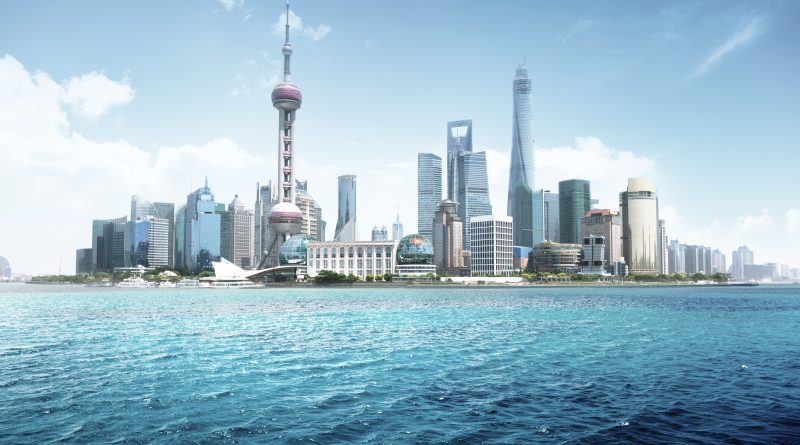
China’s latest project offers a glimpse of how those pressures are beginning to influence project design. The country has launched what is believed to be the world’s first commercial-scale wind-powered underwater data center, located off the coast of Shanghai. While the facility has attracted attention for its technology, its broader significance lies in what it reveals about the future of engineering and construction.
AI is creating a new generation of project demands
The growth of AI is driving demand for data centers at a pace many markets are struggling to accommodate. Unlike traditional digital services, AI systems require enormous computing capacity, resulting in higher energy consumption and more demanding cooling requirements.
For developers, that creates a practical challenge. Suitable sites must provide reliable electricity, robust telecommunications connections, sufficient land and effective cooling solutions. In many urban and industrial regions, those requirements are becoming increasingly difficult and expensive to meet.
The challenge is already reshaping investment strategies. Major technology companies are exploring locations close to renewable energy projects, while governments are treating data center development as a strategic economic priority.
As a result, data centers are increasingly being viewed alongside power plants, transport networks and industrial facilities as critical assets. The debate is no longer simply where to build additional computing capacity. It is how to deliver it efficiently, economically and sustainably.
China’s offshore project reflects that shift.
The project highlights the convergence of energy and digital assets
The Shanghai Lingang facility is located more than 10 kilometers offshore and is powered by a nearby offshore wind farm. Rather than relying solely on conventional cooling systems, the submerged facility uses the surrounding seawater to help manage heat generated by its servers.
The project has a reported capacity of 24 megawatts and contains nearly 2,000 servers. Developers claim electricity consumption can be reduced by almost 23% compared with traditional land-based facilities.
From a construction perspective, the project is notable because it combines two sectors that have traditionally been developed separately. Renewable energy generation and digital infrastructure have been integrated into a single offshore development.
That approach could become increasingly attractive as AI demand grows. Offshore wind projects already require subsea cabling, marine engineering expertise and long-term asset management. Locating computing facilities closer to energy generation assets could reduce transmission requirements while improving overall efficiency.
The project also reflects a wider trend. Energy, communications and industrial developments are becoming more interconnected as owners seek greater performance from increasingly complex assets.
New opportunities are emerging for engineering and construction firms
While underwater data centers remain an emerging concept, the engineering requirements involved will be familiar to many contractors.
Projects of this nature require expertise in offshore construction, subsea foundations, cable installation, corrosion protection and long-term maintenance planning. They also demand close coordination across multiple disciplines, including energy, telecommunications and marine engineering.
Many of the capabilities developed through offshore oil and gas projects, ports and renewable energy schemes could prove directly relevant to future digital infrastructure developments.
This overlap may create opportunities for contractors looking beyond traditional markets. The same forces driving investment in offshore wind and energy transition projects are now influencing the development of AI-related facilities.
For engineering firms, the expansion of data center construction is already generating significant demand. Offshore facilities could broaden that market further, creating new work across design, construction and asset management.
Infrastructure design is evolving alongside AI
The underwater data center near Shanghai is unlikely to become the standard model for every future facility. Questions remain around maintenance costs, regulatory requirements and long-term operational performance.
Even so, the project demonstrates how quickly project design is evolving in response to AI’s demands.
For decades, data centers were largely viewed as real estate developments housing technology equipment. Increasingly, they are becoming highly specialized assets that require the integration of energy systems, advanced cooling technologies and complex engineering solutions.
That shift carries important implications for the construction sector. As AI drives the next wave of investment, demand is likely to extend well beyond server manufacturers and technology companies.
Engineers, contractors, marine specialists and project developers may play a central role in determining how and where future computing capacity is delivered.
The significance of China’s underwater data center is not simply that it operates beneath the ocean. It is that it offers an early indication of how AI is beginning to influence the design, location and delivery of critical projects around the world.
Source