The AI land rush reshaping real estate economics
Subscribe to our free newsletter today to keep up to date with the latest construction news.
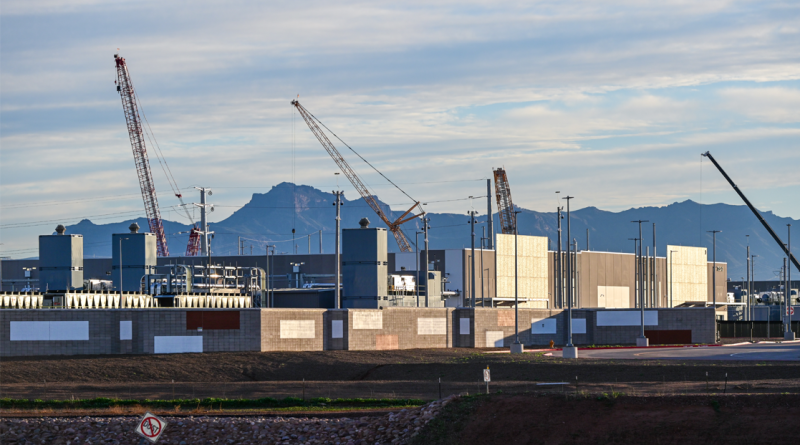
Artificial intelligence is reshaping real estate markets beyond office demand and logistics networks. A new category of asset, known as powered land, is gaining traction as hyperscale data center operators compete for sites that can deliver immediate access to electricity at scale.
Powered land refers to plots that already have secured grid connections or a clear path to high-capacity energy supply. In traditional real estate, proximity to transport, labor and urban density drove value. That hierarchy is shifting. For AI infrastructure, energy availability is emerging as the primary constraint, forcing investors to rethink how land is priced and prioritized.
The scale of demand is tied to the rapid growth of AI workloads. Training large models and running inference systems require vast computing power, which drives electricity consumption far beyond that of conventional data centers. Hyperscalers are seeking locations where power can be deployed quickly, even if those sites sit outside established urban hubs.
This shift is visible across the UK, where former industrial zones and rural areas are being reconsidered as viable infrastructure locations. Regions that once struggled to attract investment are entering a new digital supply chain, anchored by energy access rather than logistics efficiency. The result is a reordering of land desirability, where overlooked areas can command premium valuations if they meet power requirements.
Grid constraints, speculative development and the rise of zombie projects
The rapid acceleration in demand has collided with a more rigid reality: the pace of grid expansion. Connection queues have expanded sharply, with wait times stretching beyond a decade in some cases. Developers face a bottleneck that cannot be solved through capital alone, since grid upgrades require regulatory approval, engineering capacity and long planning cycles.
This imbalance has created space for speculative activity. Investors and developers are acquiring land with the expectation that future grid access will unlock value. Not all of these projects are likely to materialize. The term zombie projects describes developments that secure planning permission but lack a realistic path to power.
These projects introduce inefficiencies into the market. Grid capacity can be tied up by speculative applications, delaying viable developments that could deliver operational infrastructure. For policymakers and grid operators, distinguishing between credible projects and speculative land banking is becoming a pressing issue.
The risk extends to capital allocation. As valuations rise for land perceived to have future energy access, investors may overpay for assets that remain stranded. The gap between planning approval and actual power delivery creates uncertainty, particularly for funds seeking predictable returns from infrastructure investments.
Repricing land and reshaping regional economies
The emergence of powered land is driving a repricing across segments of the real estate market. Industrial land that once traded on logistics fundamentals is now evaluated through the lens of energy capacity. In some cases, sites with confirmed power access command multiples of standard industrial valuations.
This repricing is not uniform. It reflects a combination of grid proximity, connection timelines and regional policy support. Areas with legacy energy infrastructure or proximity to substations are seeing renewed interest, while locations without clear upgrade paths risk being sidelined.
The implications extend beyond real estate investors. Local economies may benefit from renewed demand, particularly in regions with underused industrial land. Data center development can bring construction activity, long-term operational roles and supply chain investment. At the same time, it raises questions around energy allocation, land use priorities and environmental impact.
Over time, the distinction between powered and unpowered land may become a defining feature of the market. As AI adoption accelerates, the ability to deliver reliable, large-scale electricity will shape not only where data centers are built, but also how land is valued across regions.
Sources:
Global Banking and Finance Review