The 8 Top Features to Include in a New Mini Golf Course Design
In This Article
This article contains:
- Contours and Slopes
- Interactive Challenges
- Durable Turf
- Immersive Theming
- Night Lighting
- Operational Flow Elements
- Built-In Accessibility
- Add-On Revenue Spaces
- Top 3 Mini Golf Design Companies
- Methodology
- Miniature Golf Course Builder Comparison Table
- Frequently Asked Questions
- Finalizing Your Mini Golf Construction Strategy
Modern mini golf courses demand playability that keeps groups engaged, operational flow that prevents bottlenecks and intelligent spatial planning that maximizes revenue per square foot. Discover the essential structural and thematic features for your commercial blueprint, and the industry-leading companies that can bring your vision to life.
Contours and Slopes
Incorporating real-golf contours, slopes and banking elements transforms each hole into a skill challenge rather than a simple tap-through experience. As strategic elevation changes, players have to read the green and adjust their approach, extending playing time per hole and creating memorable moments that justify premium pricing.
Interactive Challenges
Interactive challenges keep players mentally engaged throughout. Trick shot ramps that reward precision, moving obstacles requiring timing and secret high-risk paths offering shortcut opportunities create dynamic playing experiences. These elements encourage repeat visits because players want to master the course and discover alternate routes they missed initially.
Durable Turf
Laying commercial-grade synthetic turf is nonnegotiable for serious course investments. High-quality turf ensures true ball roll and consistent playability while withstanding heavy foot traffic during peak periods. Cheaper residential-grade alternatives might save money up front but may develop worn paths and uneven surfaces, leading to costly replacements and damaging your reputation.
Immersive Theming
Immersive theming creates a cohesive visual experience that justifies ticket prices and differentiates your course from generic competitors. Whether you choose pirate adventure, tropical paradise or local landmarks, every element from props to water features should reinforce that narrative. Unified aesthetics create photo opportunities at every hole, driving organic social media promotion.
Night Lighting
Installing high-quality night lighting directly impacts your daily revenue ceiling. Extended evening hours capture after-dinner crowds, date-night customers and families seeking activities once temperatures cool. Proper lighting requires strategically placed fixtures that illuminate playing surfaces without creating glare. When you accent theming elements, you can maintain the intended atmosphere throughout operating hours.
Operational Flow Elements
Wide pathways between holes and spacious waiting areas prevent bottlenecks that kill customer satisfaction during busy periods. Consider creating designated waiting areas at challenging holes where groups naturally slow down. These spatial considerations cost nothing in planning but require expensive redesigns if you discover flow problems after construction.
Built-in Accessibility
Courses should incorporate gentle grading, ADA-conscious slope planning and wide, obstacle-free paths to improve accessibility for more players. Smart accessibility planning from day one costs far less than retrofitting a completed course to meet applicable code requirements.
Add-On Revenue Spaces
Deliberately leaving space in your initial layout for add-on revenue drivers maximizes long-term profitability. A strategically located snack bar captures impulse purchases, an arcade area extends visit duration, and a dedicated party space opens corporate event and birthday revenue streams. These additions don’t need immediate construction, but spatial footprint and utility infrastructure should be planned from the start.
Top 3 Mini Golf Course Design Companies
Whether you are looking for a turnkey outdoor course or an innovative indoor experience, these companies can meet your needs.
1. Harris Miniature Golf Courses
Harris Miniature Golf Courses stands as the premier industry leader in custom mini golf course design and construction for B2B clients nationwide and internationally. Since 1958, this family-owned company has delivered fully customized courses that drive measurable ROI, turning mini golf into a high-revenue investment rather than a simple amenity.
With comprehensive in-house capabilities, including landscape architecture, dedicated project management and experienced construction crews, nothing is left to chance. Every client receives free initial course design, comprehensive investor and feasibility kits and unmatched support before, during and after construction. Its track record of quality and innovation has established Harris Miniature Golf Courses as one of the industry’s most trusted names.
Key features:
- Free initial course design
- Comprehensive investor and feasibility kits
- Unmatched support before, during and after construction
- Consultancy to maximize profitability
2. COST
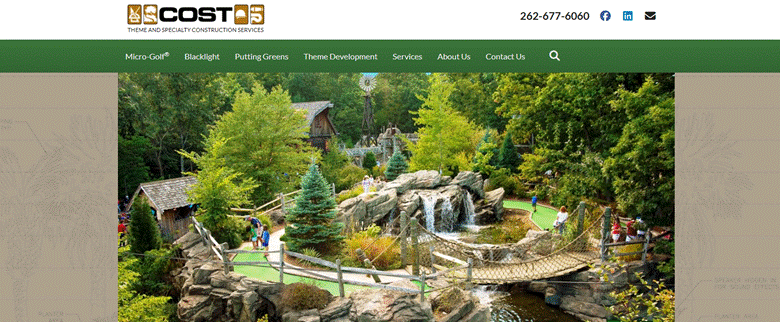
COST offers a strong option for builders seeking prefabricated miniature golf courses or large-scale custom adventure golf facilities. The company provides solutions ranging from compact modular putting greens to multi-course entertainment destinations spanning several acres.
COST brings industrial-grade capacity to construct realistic artificial stone landscapes. Its preconstruction modeling capabilities allow clients to visualize finished products before breaking ground. Licensed and registered contracting credentials in most U.S. states streamline permitting and local code compliance.
Key features:
- Wide range of course sizes and options
- Preconstruction modeling
- Industrial-grade construction capacity
- Theme carpentry capabilities
3. Blacklight Attractions
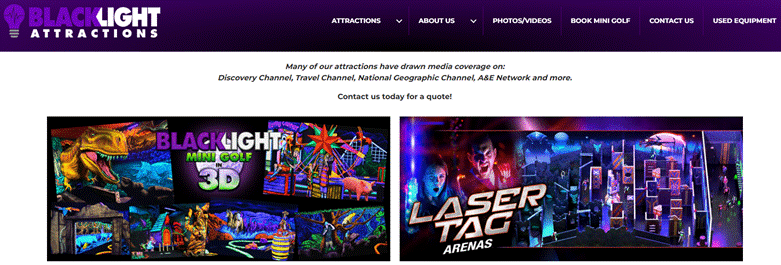
Blacklight Attractions specializes in highly immersive and visually striking themed indoor courses, perfect for entertainment centers. Its expertise in custom 3D visual effects showcases fluorescent artwork and UV-reactive environments. This creates otherworldly playing experiences that stand out in competitive markets.
Blacklight Attractions brings extensive experience designing for licensed character themes and major amusement parks, translating to polished execution and proven crowd appeal. It also sometimes offers preowned items to help minimize initial capital expenditures. This makes its distinctive indoor blacklight concept accessible to developers working with tighter budgets.
Key features:
- Custom 3D visual effects
- High-tech special effects, including CGI animation and animatronics
- Designs for licensed character themes
- Preowned options sometimes available
Methodology
The top mini golf course design companies showcase a commitment to durable commercial construction, innovative playability features and comprehensive site planning. Industry leaders provide end-to-end support, including permitting consultation, landscape architecture and post-construction maintenance guidance.
Miniature Golf Course Builder Comparison Table
Comparing leading companies side by side can help inform decisions.
| Company Name | Best for | Standout Feature |
| Harris Miniature Golf Courses | Custom B2B construction nationwide and internationally | Free initial design and unmatched post-construction support |
| COST | Prefabricated and modular options | Licensed in the majority of U.S. states |
| Blacklight Attractions | Indoor blacklight and highly themed entertainment centers | Custom 3D UV-reactive environments with special effects |
Frequently Asked Questions
Construction professionals and property owners often need clarity on how layout, accessibility and materials affect long-term performance.
How does course layout impact operational flow and revenue?
Wide pathways and well-designed waiting areas prevent backups that extend playing time and frustrate customers. Planning the spatial footprint for add-on revenue generators, like snack bars, from the beginning creates additional spending opportunities without future renovations.
What design elements make a mini golf course accessible?
Accessible courses incorporate gentle slope transitions, maintain wide, clear pathways and eliminate obstacles that create barriers for mobility devices. Building accessibility into your initial blueprint costs significantly less than retrofitting later.
Why do builders prioritize commercial-grade synthetic turf?
Commercial-grade turf delivers consistent ball roll and withstands constant foot traffic without developing worn spots. This durability extends turf lifespan, avoiding the costly early replacements that budget alternatives may require.
Finalizing Your Mini Golf Construction Strategy
A profitable mini golf course requires a balance of engaging obstacles, smooth operational flow and high-quality materials. An experienced full-service builder can guide you through every phase, ensuring your course is designed and constructed flawlessly from day one.
*Please note that this list includes sponsored content. Some of the companies, products, or services featured have entered into commercial agreements for placement. Sponsored placements do not necessarily reflect an endorsement and should be considered alongside other options in the marketplace.