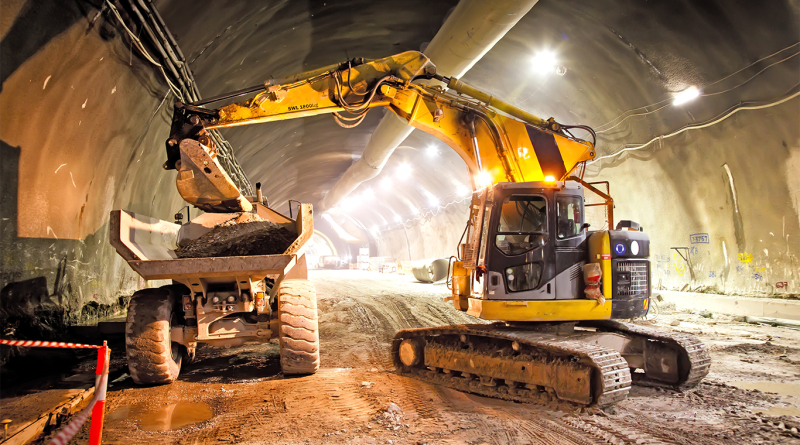
The $16 billion Hudson Tunnel tests federal funding commitments
Subscribe to our free newsletter today to keep up to date with the latest construction news.
The $16 billion Hudson Tunnel Project between New York and New Jersey is already under construction, with workers on site, contracts awarded and the engineering program well beyond the planning stage. Yet for several months, one of the country’s largest transportation projects faced another kind of risk: whether money already committed by the federal government would continue to arrive.
That dispute reached a new stage on Aug. 28, when the Trump administration appealed a federal court judgment requiring payments for the project to continue. The appeal followed months of litigation between the federal government, New York, New Jersey and the Gateway Development Commission, the organization responsible for delivering the tunnel.
For project managers, contractors and public officials, the case raises a question with implications well beyond the Northeast Corridor: Can a major infrastructure project operate predictably when its construction schedule spans several presidential administrations and its financing remains exposed to changes in federal policy?
A century-old tunnel has become a national infrastructure pressure point
The engineering need behind the project is difficult to separate from the funding dispute. Passenger trains between New York and New Jersey currently rely on the North River Tunnel, which opened in 1910 and carries Amtrak and NJ Transit services under the Hudson River as a critical section of the Northeast Corridor.
Its age is only part of the problem. Superstorm Sandy flooded the tunnel in 2012, leaving saltwater damage that continues to affect its infrastructure. The Hudson Tunnel Project is designed to build a new two-track tunnel beneath the river before rehabilitating the existing tubes, allowing work to proceed without severely restricting rail service between New Jersey and Manhattan.
Around 200,000 passengers and 425 trains use the existing crossing each day, according to project and government figures. New Jersey officials have warned that a failure requiring the old tunnel to close could reduce capacity by as much as 75% during peak periods, with economic effects extending well beyond individual commuters.
The Northeast Corridor links Boston, New York, Philadelphia, Baltimore and Washington, connecting several of the country’s largest labor and commercial markets. The Hudson crossing remains one of the network’s narrowest operational points, which helps explain why the project’s cost and scope have attracted sustained federal attention.
Gateway Development Commission estimates indicate that Hudson Tunnel construction will support 95,000 jobs and generate $19.6 billion in economic activity. The organization also estimates that an average of $87 million in goods and services will be purchased from businesses each month during construction, while seven of the project’s 10 construction packages are now underway or completed.
Those figures make Gateway more than an argument about whether Washington should finance a regional rail project. It is an active construction program with contractors, employees, machinery and procurement commitments distributed across a much larger supply chain, which made the consequences of a federal payment freeze more immediate.
The funding freeze turned infrastructure finance into a legal fight
The US Department of Transportation suspended payments for the Hudson Tunnel Project around the start of the federal government shutdown in fall 2025 while it conducted a compliance review. By early February, Gateway Development Commission said its available funding and credit had been exhausted and warned that construction would need to pause if federal disbursements did not restart.
Nearly 1,000 jobs faced immediate loss, with thousands more connected to active projects potentially exposed if the stoppage continued. The commission filed a breach of contract action against the federal government, while New York and New Jersey launched separate litigation challenging the funding freeze.
The states argued that roughly $15 billion had already been committed under federal funding agreements and that the administration could not indefinitely block those payments. On Feb. 6, US District Judge Jeannette Vargas issued a temporary restraining order preventing the federal government from continuing to withhold the money, after which funding resumed.
By Feb. 18, New York Attorney General Letitia James said all previously frozen money then owed to the project had been released, including a final payment of nearly $130 million. The legal dispute continued after construction restarted, with the court issuing a permanent order in late June blocking the administration from freezing the federal grants.
The administration filed an appeal on Aug. 28, but reimbursements and construction are continuing while the case moves forward. The episode exposes a difficult feature of modern infrastructure finance because megaprojects are built over time frames that frequently outlast the elected officials who approve them.
A tunnel can take years to design, procure and construct, while political priorities can change after a single election. Long project schedules have always carried policy risk, but the Gateway case raises a more specific issue about the degree to which executed federal funding arrangements can be revisited after contractors have mobilized and construction is underway.
For states and infrastructure authorities, the answer influences how future projects are financed. For contractors, it affects how political and payment risk is priced into bids and how much protection may be needed before work begins.
Stopping a megaproject creates costs of its own
A construction pause does not mean costs disappear. Large civil engineering projects require specialized equipment, temporary works, security, insurance, project management teams and complex subcontractor networks, and many of those obligations continue even when physical construction slows.
Gateway officials warned that a prolonged pause could threaten about 11,000 jobs connected to projects then underway, beyond the nearly 1,000 positions considered at immediate risk. Contractors may also seek compensation for delays, equipment can remain idle but costly, specialists may move to other projects and procurement schedules can slip.
Restarting work can create another round of mobilization costs, making infrastructure shutdowns financially complicated even when they are intended to limit spending. Gateway is particularly exposed because the project is no longer waiting for permission to begin, with construction sites operating in both New York and New Jersey and the program moving into technically complex tunneling work.
That matters for taxpayers regardless of their view of the project. Funding uncertainty can increase the final cost of infrastructure without changing the finished asset, while delays can extend schedules, increase contractor claims and push procurement into different pricing environments.
The implications stretch well beyond one tunnel because US infrastructure programs increasingly depend on partnerships between federal agencies, state governments, local authorities and private contractors. Many require funding agreements that must survive multiple election cycles, and any perceived increase in political risk can influence how those projects are priced and structured.
Contractors may build more contingency into bids, states may seek larger reserves and lenders may demand stronger protections before capital is committed. Public agencies may also become more cautious about starting construction before the legal status of federal commitments is fully tested.
Beneath the Hudson, construction continues as the legal case moves into its next phase, capturing the central tension surrounding the project. Tunnel crews work according to engineering schedules measured in years, while federal policy can shift on a political timetable measured in months.
For the next generation of US megaprojects, managing the gap between those two clocks may become almost as consequential as managing concrete, steel and soil.
Source:
NBC News