The $142 Billion TxDOT Question: Why Rental Penetration Is Hitting Record Highs on Texas Highway Projects
Texas is investing billions in transportation infrastructure through 2033, creating an unprecedented pipeline of highway work. At the same time, equipment rental penetration has escalated to record highs, driven by contractors seeking fleet flexibility, capital preservation and improved utilization rates. For contractors on these massive, multiyear projects, the strategic insight is that rental may deliver competitive advantages that ownership cannot.
Understanding the Scale of the Texas Transportation Boom
In 2023, Governor Greg Abbott announced the $142 billion Unified Transportation Program. It represents the largest highway and roads investment in the state’s history, with TxDOT’s record-breaking commitment extending through 2033 to fund interstate expansions, congestion relief corridors, bridge replacements and rural highway upgrades. This sustained pipeline means that project life cycles will last several years.
Ferrovial and Webber recently secured the $1.47 billion bid to design-build a 15-mile section of highway in southeast Houston for Grand Parkway Segment B-1, including four new tolled lanes, discontinuous frontage roads and direct connectors, which will be delivered under a 15-year capital maintenance term. Projects like these are simultaneously launching across Texas highways, intensifying competition for labor, machinery and materials, making innovative management strategies essential to secure equipment.
Contractors with portfolios spanning across urban centers and remote corridors require various machine types for various construction phases, from clearing and earthmoving through paving and finishing work. Scalable fleets require diverse mechanical solutions.
Analyzing the Strategic Shift From Ownership to Rental
The rental market reached 59.5% penetration in 2025, according to the American Rental Association’s rental penetration index, marking the fifth consecutive year of increases. Contractors now use rental solutions as a fleet optimization strategy. Rising material prices due to import tariffs dramatically affect manufacturers. Adding advanced telematics, emissions technology and operator-assistance features further increases ownership costs while making newer rental fleets more attractive for accessing current technology without frequent fleet replacement.
Wise road contractors evaluate the total life cycle costs instead of letting the purchase price blind them, factoring how utilization rates determine value into all capital expenditure decisions. Machines create value only while in active use and idle assets continue to generate costs through depreciation, insurance, financing and storage. Many businesses combine owning core fleets with renting specialty machines to maximize operational flexibility.
Calculating the True Cost of Equipment Ownership
Understanding capital expenditures versus operational costs provides a framework for decision-making that considers factors beyond the purchase price. The total cost of ownership calculations include ongoing expenses that accumulate throughout the machine’s service life, such as preventive maintenance, unexpected repairs, insurance, storage, transportation, compliance requirements and residual value risk.
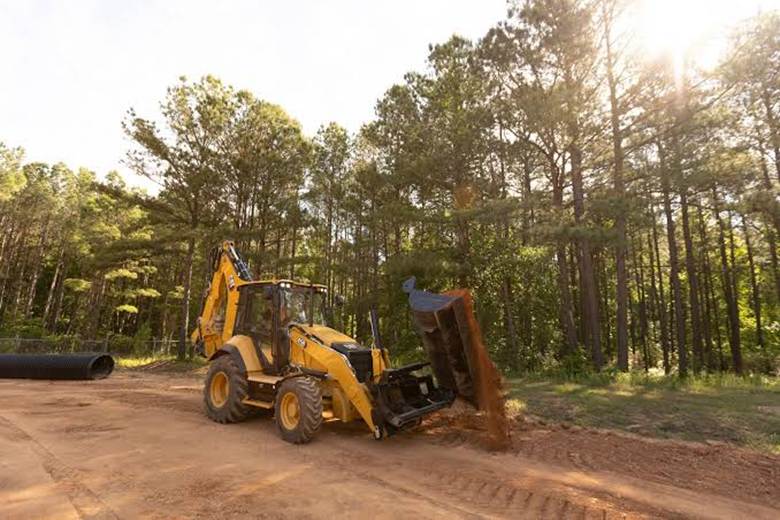
Equipment is a depreciating business asset requiring continuous investment. Daily use over more than a year may justify ownership, but when a backhoe or scraper gets used intermittently, the equation favors rental units as operational expense, shifting ownership responsibilities and preserving capital.
Evaluating How Market Volatility Favors a Rental Model
Economic uncertainty makes tying up capital in large, company-owned fleets increasingly risky. Project start dates, permitting timelines, funding approvals and material availability can quickly alter requirements. Rental provides scalability, allowing companies to increase or decrease their fleet size as workloads change without carrying excess assets from one project to another.
Fluctuating bid volumes, labor shortages and regional construction demand create unpredictable utilization patterns. Many businesses retain their borrowing capacity for strategic investments, such as workforce development, rather than allocating capital to often-idle machines, leveraging rental contract resilience and adaptability to remain competitive.
Implementing Key Strategies for Equipping Highway Projects
Leading companies plan strategically for contracting rental fleets alongside project schedules, workforce availability and cash flow projections. Flexibility improves schedule certainty while reducing downtime and enabling quick responses to unexpected changes. Most businesses build hybrid approaches that combine owned assets with rented specialty machines.
Matching Equipment Needs to Phased Construction Schedules
Even large transportation projects rarely use all machines in their fleet simultaneously. Demand evolves as construction progresses through clearing, earthmoving, utility relocation, grading, drainage installation and paving.
Consider the Grand Parkway Segment B-1 design-build contract. Over 15 years, the project specifications include, “Construction of four new tolled lanes operated by TxDOT, discontinuous frontage roads, direct connectors at SH 35 and the new SH 99, operational upgrades to SH 35.” Short-term frontage road work may require specialized machinery with different tracks than those used for standard highway work, making machine rental a better option.
Owning every machine used in each project phase results in inconsistent use. Rental options align equipment availability with construction milestones, reducing wasted time while maintaining productivity. Companies frequently rotate assets between multiple jobs, making short-term rentals useful for covering peak demand.
Leveraging Rental Fleets for Specialized and Short-Term Tasks
Take trenchless pipe drilling, an advanced cutting method that Utility Relocation Services says is “often better for the environment and can save property owners’ time and money by reducing the disruption costs often associated with open-cut landscape, concrete and asphalt trenching.”
Specialized machinery requirements on Texas highway projects often favor rental over ownership. Trenchless pipe-drilling equipment, hydraulic pile drivers and utility-relocation backhoes are heavily used during specific project phases, then sit idle.
“The rental market has fundamentally shifted in the last five years, and we’re seeing it play out across West Texas,” says Jim Nelson, president of Warren CAT, which serves the TxDOT San Angelo, Abilene, Lubbock, Odessa, Amarillo and El Paso districts. “The American Rental Association reported that rental penetration hit 59.5% in 2025 — that means contractors are now renting nearly 60% of their equipment hours rather than owning. What we’re observing in our territory aligns with that. On these multiyear TxDOT projects, contractors are renting backhoes, excavators and specialty machines for specific project phases rather than tying up capital in ownership. A project like Grand Parkway runs six years — your equipment needs for utility relocation in year one are completely different from your paving needs in year five. Rental gives contractors the flexibility to match their fleet to the work, not carry idle assets between phases.”
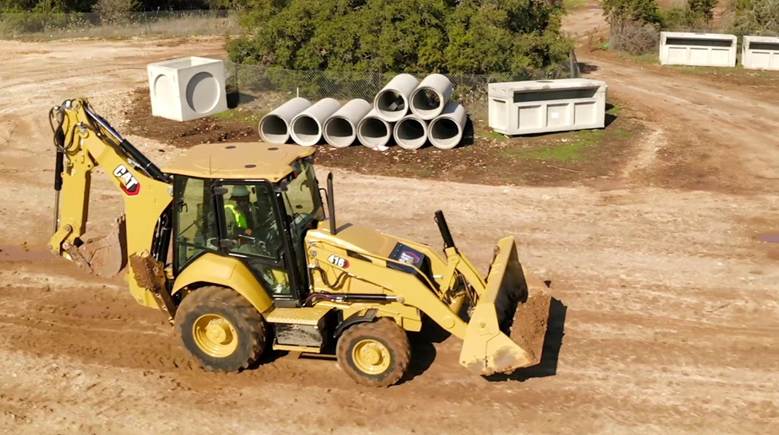
The economic logic is clear. A Cat 430 backhoe, commonly used for utility trenching and backfilling on highway projects, rents for approximately $1,626 weekly or $3,877 monthly. Purchase price can exceed $120,000, plus ongoing maintenance, insurance, storage and depreciation. For an 8-week utility relocation phase on a TxDOT corridor project, rental costs are roughly $13,000. Ownership locks six figures in capital for a machine that may sit unused 40-50% of the year after that phase completes.
Renting task-focused machines avoids carrying expensive, underutilized assets from one project phase to another. Modern rental fleets also provide access to newer technology — such as telematics, improved hydraulic systems and emissions-compliant engines — without requiring regular capital investments in fleet replacement.
Addressing the Skilled Labor Gap With Rental Partnerships
Labor shortages affect equipment utilization throughout Texas, and owning assets provides little value if qualified operators remain unavailable. Texas Materials points out that truck drivers are skilled operators who “operate tack trucks, mixer trucks, paving trucks, and more. These construction vehicles require high levels of skill to operate safely.” The growing demand for experienced construction equipment operators makes workforce availability that matches machine rentals a critical strategic factor.
Unavailable or inexperienced operators or unexpected mechanical issues create downtime that affects production schedules and project costs. Full-service rental providers often contribute expertise through equipment selection, operator familiarization and maintenance support. Successful strategies require matching the right machine, operator and project phase to each specific need.
More Questions About Texas Construction Equipment Rental
Here are some of the most common questions about backhoes, a type of heavy machinery often rented for short-term projects or purchased for long-term use.
Can a backhoe be delivered to jobsites in Texas?
Yes, delivery logistics are standard in rental agreements. Providers maintain locations across the state to serve various project sites, and rental companies coordinate deliveries around project mobilization dates to minimize customer downtime.
Transportation planning is especially important for remote highway corridors. Renters should confirm delivery timelines, pickup scheduling and site access requirements before finalizing agreements.
What size backhoe is best to rent for each project?
Machine selection depends on excavation depth, bucket capacity, lifting requirements, available working space, ground conditions and attachment compatibility. Rental experts match assets to specific applications.
Oversized machines may have higher operating costs and reduced maneuverability, while undersized options can slow production. Selections based on the application can improve productivity and fuel efficiency.
Are attachments included with a backhoe rental?
Contractors typically rent attachments such as buckets, augers and breakers separately, favoring versatile machines tailored to exact project and landscape needs. Attachment availability varies by provider and machine model, making it important to confirm compatibility during reservation.
Common options include trenching and grading buckets, hydraulic breakers and compactors. Renting attachments only when needed helps avoid purchasing specialized tools that may spend most of their life in storage.
Building a More Flexible Future for Texas Highway Construction
The unprecedented scale of Texas transportation investment creates an environment in which project demands, labor availability, equipment technology and economic conditions continue to evolve. Companies increasingly evaluate decisions based on productivity, utilization, flexibility and long-term business resilience. Rental has emerged as a strategic tool within broader fleet management strategies, helping businesses remain agile and prepared for future opportunities across the state’s expanding infrastructure pipeline.
*Please note that this list includes sponsored content. Some of the companies, products, or services featured have entered into commercial agreements for placement. Sponsored placements do not necessarily reflect an endorsement and should be considered alongside other options in the marketplace.