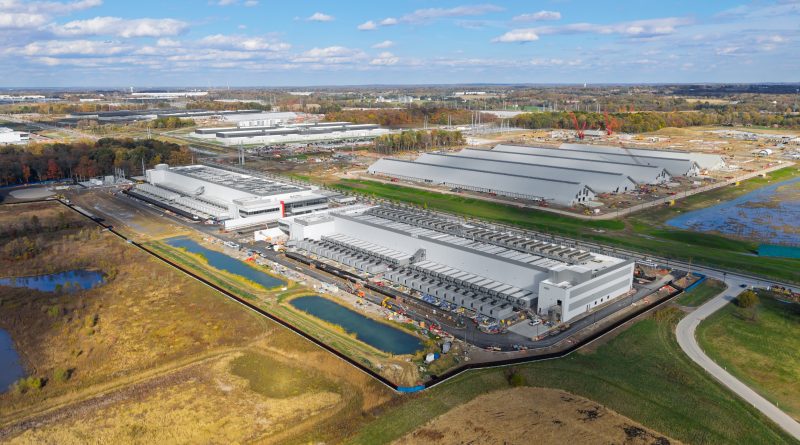
Texas counties are pushing back against the AI data center boom
Subscribe to our free newsletter today to keep up to date with the latest construction news.
Texas has spent years positioning itself as a natural home for America’s next wave of digital infrastructure. Cheap land, relatively low energy prices, business-friendly regulation and abundant natural gas have helped turn the state into one of the country’s largest data center markets. Now, as artificial intelligence drives a surge in computing demand, rural communities are questioning the costs tied to that growth.
Hill County, Texas, recently became a flashpoint after commissioners voted 3-2 to approve a one-year moratorium on new data center development in unincorporated areas. The vote followed opposition to a proposed 300-acre campus near Hillsboro from Provident Data Centers. Residents raised concerns over water use, electricity demand, noise and the long-term industrialization of rural land.
The decision may appear local, but it reflects a wider national shift. Communities that once competed aggressively for industrial development are becoming more skeptical of hyperscale data center projects tied to the AI boom. The central question is no longer whether AI infrastructure is needed. It is who benefits, who pays and who gets a say.
Texas has become ground zero for America’s AI infrastructure race
The rapid rise of generative AI has changed infrastructure demand across the technology sector. Training and running large AI models requires enormous computing capacity, which means vast facilities filled with GPUs, cooling systems and power infrastructure.
Texas has become one of the main destinations for these projects. Its deregulated energy market, large tracts of inexpensive land and proximity to natural gas generation have made it attractive to hyperscalers and colocation providers racing to secure capacity.
Dallas-Fort Worth already ranks among the largest data center hubs in North America, while secondary markets across the state are drawing more attention from developers seeking lower costs and fewer zoning restrictions. Rural counties are especially attractive because unincorporated land often faces less regulatory oversight than major metropolitan areas.
That expansion is arriving as concerns about the physical footprint of AI infrastructure become harder to ignore.
Modern AI data centers consume extraordinary amounts of electricity. Some facilities now require power comparable to that of small cities. Grid operators across the US have warned that rising demand from hyperscale facilities could place significant pressure on transmission systems and generation capacity.
Water use has also become politically sensitive. Large facilities rely heavily on cooling systems, particularly in hotter climates such as Texas. Communities facing drought concerns increasingly view massive industrial water consumption as a direct threat to local resilience.
The economics can appear uneven at the local level. Construction can create temporary employment, but operational facilities typically require relatively small permanent workforces compared with manufacturing plants or logistics hubs that occupy similar amounts of land.
For many rural communities, the promise of technology investment no longer automatically outweighs infrastructure concerns.
Rural communities are beginning to resist large-scale data center projects
Hill County is not alone. Similar debates are unfolding across several US states as local governments try to respond to the pace of AI infrastructure development.
In parts of Virginia, Arizona, Oregon and Georgia, residents have objected to noise pollution, diesel backup generators, water consumption and rising electricity demand. Some municipalities have introduced temporary pauses or stricter zoning reviews for hyperscale projects.
The pattern reflects a growing disconnect between national AI ambitions and local political realities.
Technology companies and developers often frame data centers as critical infrastructure needed for economic growth, cloud computing and AI leadership. Local residents often experience them differently. Massive facilities with limited employment opportunities can feel disconnected from the surrounding economy while still placing heavy pressure on utilities, roads and natural resources.
In Texas, that tension is especially visible because of the state’s aggressive pursuit of AI investment.
State leaders have promoted Texas as a destination for technology infrastructure, emphasizing minimal regulation and rapid permitting. Counties, however, often have limited authority over development decisions in unincorporated areas. That regulatory gap has frustrated local officials trying to respond to constituent concerns.
The Hill County moratorium reflects an effort to slow projects long enough for officials to examine what oversight tools may still be available.
It also shows that local resistance to AI infrastructure is becoming organized, rather than isolated.
The legal battle over who controls AI infrastructure is only beginning
The Hill County decision quickly triggered debate over whether counties have the legal authority to impose such restrictions.
Texas state Sen. Paul Bettencourt has argued that counties cannot enact blanket bans on lawful developments, raising the prospect of legal challenges if similar moratoriums appear elsewhere in the state.
That dispute points to a larger national issue around AI infrastructure governance.
The US lacks a coherent regulatory framework specifically designed for hyperscale AI facilities. Data centers generally fall into existing industrial, utility and zoning categories, even though many now operate at a scale that local governments were not built to manage.
The result is a fragmented landscape in which counties, municipalities, utility regulators and state lawmakers are all trying to define authority in real time.
Technology companies are likely to resist rules that could slow deployment schedules during an intensely competitive AI race. Investors continue to pour billions into infrastructure as companies try to secure computing capacity before shortages worsen.
Local governments, meanwhile, face growing pressure from residents demanding closer scrutiny of environmental and infrastructure impacts.
That tension may define the next phase of AI expansion in the US.
Data center expansion is exposing the hidden costs of the AI economy
The political conversation around AI often focuses on software breakthroughs, productivity gains and corporate competition. Far less attention has been paid to the physical infrastructure required to support those ambitions.
Data centers are becoming one of the defining industrial developments of the AI era. Their expansion carries implications not only for technology markets, but also for energy policy, water management and regional planning.
Texas illustrates the contradiction clearly. The state wants to remain central to the future of AI infrastructure, yet many communities are uneasy about what that role demands.
Hill County’s moratorium may prove temporary or face legal challenges. Even so, the vote reflects a broader shift in public perception. Data centers are no longer viewed universally as low-impact economic development projects. In many regions, they are beginning to face the same political scrutiny once directed mainly at heavy industry and energy infrastructure.
As AI demand accelerates, conflicts between local communities, state governments and hyperscale developers are likely to intensify. The next phase of the AI boom may depend not only on technological innovation, but also on whether the industry can persuade communities that the benefits outweigh the growing infrastructure burden.
Source