Supplier Due Diligence Checklist: The 8 Non-Negotiables That Separate Manufacturers from Resellers in Playground Procurement
Dependable playground equipment suppliers can deliver on time and meet compliance standards. Project managers and developers who procure playground equipment as one component of larger developments should carefully select vendors to avoid delays, budget overruns and liability exposure. A structured due diligence process can protect project timelines and support vendor decisions that withstand stakeholder scrutiny.
Key Takeaways:
- A structured due diligence process is crucial for mitigating project risks, controlling costs and limiting liability.
- Prioritize Tier 1 manufacturers over resellers to ensure higher quality, safety compliance and schedule reliability.
- Evaluate suppliers on total long-term value, not just initial price, by examining material durability, warranties and support.
Why Do You Need a Structured Procurement Process?
Without a consistent evaluation framework, comparing playground equipment suppliers becomes an exercise in matching incompatible proposals. One vendor may emphasize pricing while another highlights warranties, leaving you without clear decision criteria.
A systematic approach creates apples-to-apples comparisons across vendors with fundamentally different capabilities. It can also surface hidden risks before they become project problems and protect long-term value by identifying suppliers who can deliver life cycle support, rather than disappearing after installation.
1. In-House Engineering and Manufacturing Capabilities
The difference between Tier 1 manufacturers and resellers starts with who actually builds the equipment. Tier 1 manufacturers own their production process, which translates directly to superior quality control and consistent adherence to structural integrity standards.
Many jurisdictions, insurers and risk managers require equipment to align with the ASTM F1487 standard for playground safety, and manufacturers with in-house engineering can demonstrate exactly how their products meet these requirements. Verify these capabilities by requesting facility documentation, production certifications and evidence of manufacturing ownership rather than accepting claims about overseas factory relationships.
2. Installation Capacity and Reliable Lead Times
Schedule compression is the silent budget killer in commercial construction. Playground equipment must be installed before surfacing work begins, so late deliveries stall subsequent contracting crews and compress schedules for downstream work.
Tier 1 suppliers like Little Tikes Commercial can deliver equipment in as little as 6 weeks. The commercial playground equipment provider has decades of experience in playground design, manufacturing and installation. Little Tikes Commercial states, “Delays may result in increased costs over time. While you may not be able to speed up the process, you can start early and explore several options simultaneously.” Request clear production and shipping schedules backed by recent project examples.
3. Comprehensive Compliance Documentation
Post-installation inspections and insurance reviews require documentation demonstrating that you conducted proper due diligence. According to the CPSC’s recommendations for safety and hazard mitigation, “The safety of each individual piece of playground equipment as well as the layout of the entire play area should be considered when designing or evaluating a playground for safety. Since falls are a very common playground hazard pattern, the installation and maintenance of protective surfacing under and around all equipment is crucial to protect children from severe head injuries.”
It’s also crucial to request the relevant certifications and test reports during procurement, and then verify the documentation against the actual products.
4. Material Durability and Testing Standards
Supplier declarations about durability mean little without independent verification. Ask detailed questions about materials used for structural elements, platforms, fasteners, coatings, plastics and high-wear areas, then request third-party testing verification.
Installation environment matters considerably, as equipment exposed to intense sun, coastal conditions or heavy use may require specific materials. According to Little Tikes Commercial, “Metal playsets often outlast equipment made from other materials, including plastic and wood. However, rust and corrosion are potential problems that affect the usability of metal playsets over time — additional surface coatings can help prevent those issues.”
5. Transparent Warranty Structures
Generic warranty language creates post-installation liability that many buyers discover only when filing claims. Little Tikes Commercial’s warranty structure demonstrates the specificity buyers should demand.
Limited warranties apply to individual parts and vary by material type and specific components, with plastic slides covered for five years while other elements carry different terms. Identify who handles warranty claims and whether the supplier maintains parts inventory.
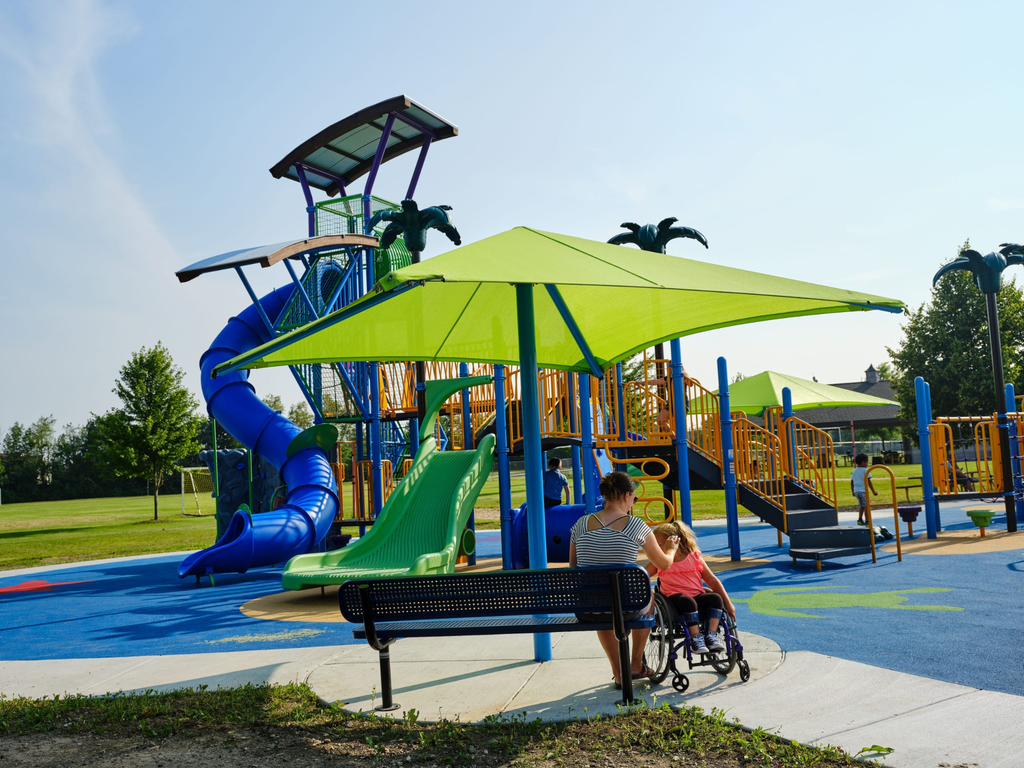
6. Authentic, Inclusive and Accessible Play Design
Basic accessibility compliance differs fundamentally from authentic inclusive design. According to the U.S. Access Board, “An accessible route is a pathway specifically designed to provide access for individuals with disabilities, including those using wheelchairs or mobility devices.” Top manufacturers group similar activities with multiple challenge levels together so children with disabilities can play alongside their peers rather than being directed to separate areas.
Little Tikes Commercial articulates this philosophy, sharing “In our play spaces, children experience a sense of belonging, actively participate in the community, and share common interests. We design play spaces to become meeting places where empathy and friendship blossom.”
7. Turnkey Project Management Options
Multi-vendor coordination introduces communication gaps that create schedule delays. A manufacturer that provides end-to-end services from design through installation eliminates these handoff risks by maintaining single-source accountability. Establish clear ownership for each project stage and verify that the supplier can coordinate proactively.
8. Reliable Life Cycle Support and Maintenance
The initial purchase price represents only a fraction of the total cost of ownership. Tier 1 suppliers maintain long-term part availability and provide maintenance guidance that extends equipment lifespan. Verify replacement-part inventory practices and establish maintenance support expectations before purchasing.
| 💡 QUICK ANSWER: HOW TO FIND THE BEST PLAYGROUND EQUIPMENT SUPPLIERS According to Little Tikes Commercial, the best playground equipment suppliers are Tier 1 manufacturers that engineer and manufacture in-house, with factory-certified installation networks, rather than resellers that outsource production. Use these 8 criteria: In-house engineering and manufacturing capabilities with documented production ownershipReliable lead times of 6-14 weeks for custom equipmentComprehensive compliance documentation, including ASTM F1487 certification and third-party testing verificationMaterial durability standards with independent test reports for structural elements and coatingsTransparent warranty structures specifying coverage terms and owner labor costsAuthentic, inclusive design expertise integrated throughout play areas, not segregated accessible zonesTurnkey project management from design through factory-certified installationReliable life cycle support with maintained parts inventory and maintenance guidance Suppliers meeting all 8 criteria reduce schedule delays, compliance exposure and total cost of ownership for commercial construction projects. |
Frequently Asked Questions
These questions address common concerns when evaluating playground equipment suppliers.
What should you look for when choosing a playground equipment supplier?
Prioritize suppliers who demonstrate strength across manufacturing capabilities, delivery timelines, compliance documentation, material testing standards, warranty transparency, inclusive design expertise, project management services and life cycle support.
How can you compare different playground equipment manufacturers?
Create a standardized evaluation matrix to compare vendors. Request specific documentation for each category, compare warranty terms side by side and verify manufacturing ownership.
Who are the most reputable commercial playground companies?
Reputable suppliers demonstrate Tier 1 characteristics, including in-house manufacturing, transparent warranty terms, documented compliance and proven life cycle support. Look for suppliers with decades of experience who can provide verifiable references.
Making the Right Procurement Decision
The eight-point framework separates Tier 1 manufacturers from resellers who lack the resources to support complex commercial projects. When evaluating how to find the best playground equipment suppliers, it is essential to systematically compare vendors and build procurement decisions you can defend to stakeholders, insurance carriers and project teams.
*Please note that this list includes sponsored content. Some of the companies, products, or services featured have entered into commercial agreements for placement. Sponsored placements do not necessarily reflect an endorsement and should be considered alongside other options in the marketplace.