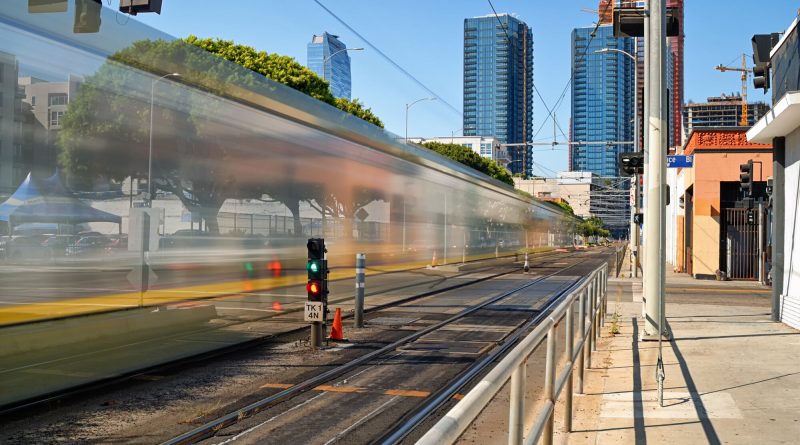
Skanska JV lands $1.9B Los Angeles light rail contract
Subscribe to our free newsletter today to keep up to date with the latest construction news.
Skanska and Stacy Witbeck have secured a $1.9 billion contract from the Los Angeles County Metropolitan Transportation Authority to build the East San Fernando Valley Light Rail Transit Project, moving one of the region’s largest transportation programs into full construction.
Skanska’s share of the contract is $957 million, which the company plans to record in its US order bookings for the third quarter of 2026.
When preconstruction and early works are included, the total contract value reaches $2.43 billion.
The joint venture will build a 6.7-mile street-level light rail line along Van Nuys Boulevard. The work includes 11 stations, utility improvements and a 26-acre rail and maintenance facility. Construction started in July 2026 and is expected to finish in December 2031.
For construction companies, the size of the award is only part of the story. The project also shows how public agencies are changing the way they procure and manage large infrastructure programs.
LA Metro selected a progressive design-build model, bringing contractors and designers into the project before full construction began.
Progressive design-build moves project decisions forward
The relationship between LA Metro and the Skanska-Stacy Witbeck joint venture began several years before the latest award.
In February 2023, Metro approved a $31 million preconstruction services contract with San Fernando Transit Constructors, the joint venture formed by Skanska USA Civil West California District and Stacy Witbeck.
The contract supported design development and construction planning before the main building phase.
That early involvement is central to progressive design-build.
Under a traditional design-bid-build process, contractors may enter after much of the design work is complete. Progressive design-build allows the owner, designer and contractor to work together earlier.
On the East San Fernando Valley project, Skanska said this gave the team time to review designs, address third-party constraints and refine construction methods before full construction.
That early work matters on a project running through a busy urban corridor.
Van Nuys Boulevard carries heavy traffic and passes through established neighborhoods and commercial areas. The project also requires utility relocations and improvements, along with construction of stations, rail infrastructure and a maintenance facility.
These conditions can increase schedule and cost risk if problems emerge late in construction. Early contractor input gives teams more time to identify access issues, utility conflicts and sequencing requirements before they affect work in the field.
Metro made a similar case when it approved the preconstruction contract in 2023. The agency said the delivery method was intended to reduce risk, save time and limit costly change orders.
For contractors pursuing large public works projects, that approach changes what owners may expect during procurement.
Construction expertise remains central, but contractors can also be asked to contribute to design reviews, cost planning and stakeholder coordination before major site activity begins.
Public funding is supporting a multiyear construction program
The contract also shows the scale of public investment needed to deliver urban rail.
LA Metro received an $893 million US Department of Transportation grant for the project in 2024. The agency had previously secured a $600 million grant through California’s Transit and Intercity Rail Capital Program.
The project also receives funding from county transportation sales taxes and other local, state and federal sources.
Metro says construction and operation of the line are expected to support more than 18,000 direct and indirect jobs. The completed route is also expected to connect riders with about 150,000 jobs across the region.
For the construction industry, the funding structure matters because it supports work extending well beyond a single budget year.
With completion scheduled for late 2031, the project represents several years of demand across civil construction, rail systems, utilities, station work and related services.
It also shows how major transit projects depend on funding from several levels of government.
Contractors working in this market must operate within projects shaped by public funding rules, local hiring requirements and community expectations, as well as engineering demands.
Metro also plans to apply a Project Labor Agreement and Construction Careers Policy local hire program to the project.
Urban rail work puts execution under close scrutiny
The East San Fernando Valley line will serve communities including Van Nuys, Panorama City, Arleta and Pacoima. It will also connect with existing and planned transportation services across Los Angeles County.
That creates a construction challenge that differs from work on an isolated site.
Crews will be building through an active urban environment where traffic, businesses, utilities and residents must be considered throughout the program. These conditions place greater importance on sequencing, communication and coordination with public agencies.
The progressive design-build structure gives the project team more time to address those issues before they become problems on site.
It does not remove construction risk. It does, however, move more decisions to an earlier stage, when changes may be easier and less costly to manage.
The $1.9 billion award therefore points to a broader change in major public infrastructure procurement.
For large civil contractors, winning work can start well before full construction. Owners are asking builders to take part earlier, contribute technical knowledge during design and help establish how complex projects will be delivered.
The East San Fernando Valley project will test that approach through 2031. Its performance on cost, schedule and construction coordination could provide a useful reference for other public agencies and contractors considering similar delivery models.
Source