Silicosis risks grow in construction: safety insights from California
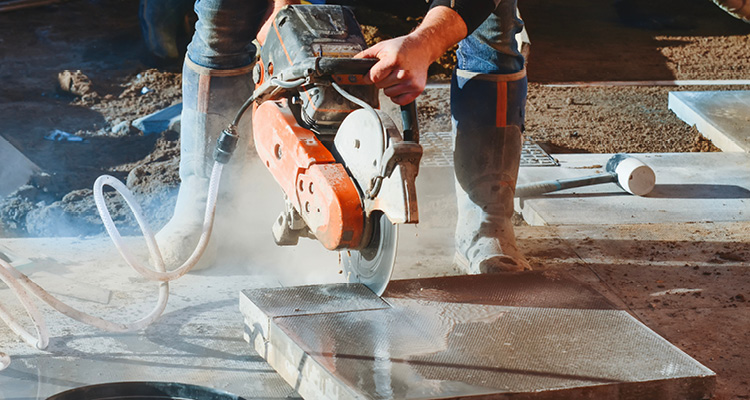
You don’t need a PhD to understand silicosis; you just need to know where the dust settles. On a construction site, exposure to silica isn’t a rare event. It’s part of the routine. When the saw hits concrete, when stone gets cut or polished, when the air turns cloudy for a moment before the fans catch up. It doesn’t look like much. It doesn’t feel dangerous. But over time, that fine dust starts to settle somewhere else, deep in the lungs of the crew.
Across California, silicosis is re-emerging in a more aggressive and visible form, reshaping how regulators, employers, and workers approach this occupational health risk.

In the US, more than 2 million workers are exposed to respirable crystalline silica (RSC) annually, according to the Occupational Safety and Health Administration, with construction workers among the most at risk. In California, where engineered stone use is widespread, health officials are now tracking a growing number of silicosis cases tied to fabrication work, with many cases tied to younger workers with only a few years of exposure.
Globally, silicosis causes over 10,000 deaths each year, underscoring the scale of a risk that remains both well understood and preventable.
A different kind of silicosis
Silicosis is caused by inhaling the fine silica dust generated when materials like concrete, brick, and stone are cut or ground. Once inhaled, these RSC particles lodge deep in the lungs, causing scarring that can lead to chronic respiratory disease, disability, and death.
Traditionally, silicosis had been linked to long-term exposure. What is emerging now is a faster and more severe form of the disease. A potential culprit is engineered stone, widely used in countertops. It can contain more than 90 percent silica, far higher than most natural materials. Workers cutting and polishing these surfaces, particularly in fabrication shops, are exposed to concentrated levels of fine dust, often in enclosed or poorly ventilated environments.
According to California Department of Public Health data, cases of “accelerated silicosis” are increasing, with symptoms developing in less than a decade. In some instances, workers face life-threatening complications or require lung transplants before the age of 40.
Regulatory and legal pressure is building
The rise in cases is drawing greater scrutiny from regulators and lawmakers.
At the federal level, the Occupational Safety and Health Administration silica standard sets a permissible exposure limit of 50 micrograms per cubic meter of air over an eight-hour workday. It also requires employers to implement engineering controls, conduct exposure assessments, and provide training and medical surveillance.
In California, enforcement is intensifying under Cal/OSHA, with increased inspections of fabrication shops and construction sites. The state is also exploring additional restrictions on engineered stone due to its high silica content.
Legal exposure is rising alongside regulatory oversight. Employers are facing more lawsuits tied to silica-related illnesses, particularly where there is evidence of inadequate controls or failure to meet compliance requirements. Beyond financial penalties, these cases can lead to reputational damage and operational disruption.
Where protection is falling short
Despite standards, gaps in awareness, and protection remain across both construction sites and fabrication environments.
One of the most significant challenges is visibility. Many organizations lack an understanding of where silica exposure is occurring and how severe it is, much less real-time information. Without consistent monitoring, risks can go undetected until serious health outcomes emerge.
Control measures are also inconsistently applied. While solutions such as water suppression and local exhaust ventilation are effective, they are not always properly implemented or maintained. In fast-paced environments, these safeguards can be overlooked or deprioritized. For example, workers may cut engineered stone dry to save time or use extraction tools without properly fitted filters, significantly increasing airborne exposure.
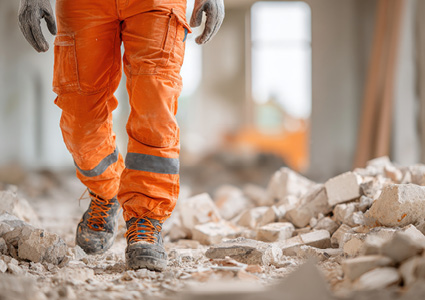
Access to hazard information remains another barrier. Safety data sheets and guidance are often difficult for workers to access when they need them. Who wants to run across the site to the office trailer and dig through folders when you are already behind schedule and appliances are waiting to be installed? Limited access means less informed decisions on-site.
Proactive measures: how employers can ensure dust safety
With harm growing and legal scrutiny increasing, employers must take decisive action to protect their workers. It is critical to have a comprehensive dust control strategy that includes:
1. Dust control measures
· Remove or replace dusty materials with less dusty ones.
· Enclose, automate, use barriers, or implement ventilation systems for dusty operations.
· Implement procedures and employee scheduling to reduce dust levels and exposure.
· Schedule regular cleaning of equipment and buildings.
· Use ventilation systems and dust collection devices to reduce dust. Local exhaust ventilation (LEV) systems can be used to remove contaminated air from the building.
2. Personal protection and hygiene
· Issue appropriate protective clothing and PPE to minimize dust exposure.
· Provide convenient washing facilities for employees to remove dirt before leaving work.
3.Proactive training, monitoring, and emergency planning
· Educate staff on the dangers of dust and ensure they are trained to implement control measures correctly.
· Create an emergency plan for spills or incidents involving dust particles or substances.
· Monitor processes closely and encourage worker feedback for improvements.
· Record dust control measures, training, and incidents to ensure adherence. Chemical management software helps ensure timely reporting and safer chemical usage.
There are a variety of steps to take to make sure your business is compliant and you’re keeping your employees as safe as possible. Here are the best dust practices to put that strategy into action.
California is a signal for US construction
What is happening in California is a preview of what’s coming across the US construction industry. As awareness of engineered stone risks grows, other states are likely to follow with stricter regulations, increased inspections, and stronger enforcement.
For employers, the shift is clear: the window for reactive compliance is closing. Waiting for enforcement or legal action to drive change carries increasing risk.
Silica dust has been a known hazard for decades. What is changing now is the speed of exposure and the level of accountability. California is no longer an isolated case; it is a signal of where workplace safety standards are headed nationwide. Dust cannot be treated as a standalone hazard. Silica exposure sits within a broader chemical safety challenge, where visibility of hazardous substances, access to clear safety information, and consistent controls across sites determine whether risks are managed or missed. Ultimately, the focus must remain on protecting the workforce, and ensuring every worker has the tools, information, and environment needed to stay safe on the job.
By Michael Sybing, Solution Specialist, Chemical Management, EcoOnline
Michael Sybing
Michel Sybing is Solution Specialist Chemical Management, at EcoOnline. EcoOnline believes in the power of technology to reshape how organizations protect their people and the planet, paving the way for a safer, more sustainable future.