
Selecting Fiber Reinforcement for High-Performance Racetrack Pavement Construction
At speeds exceeding 200 mph, racetrack pavement is subjected to forces that would compromise conventional roadways, including significant downforce, high lateral loads from banked turns, and surface temperatures far above ambient conditions. Pavement failures under these stresses can result in race cancellations and significant safety hazards.
The following analysis draws on insights from FORTA, a leading innovator in fiber reinforcement systems since 1978, to examine the engineering principles behind racetrack-grade pavement construction.
The Engineering Challenges of Racetrack Pavements
Racetrack pavements present engineering challenges distinct from those of standard roadways. Unlike typical roads that handle routine traffic, racetracks operate as controlled environments for extreme stress testing. Vehicle dynamics and specialized track geometry create loading conditions not encountered in commercial paving. Rapid acceleration and deceleration impose repetitive impact forces, while high tire friction leads to mechanical wear and thermal stress beyond the limits of standard pavement specifications.
Track geometry further intensifies these demands. Banking angles on oval tracks can reach steep inclines, and tight corner radii focus vehicle loads into limited areas. These conditions require materials engineered specifically for high-performance and durability in racetrack applications.
How to Select the Right Type of Fiber Reinforcement
Selecting the appropriate fiber reinforcement depends on pavement performance requirements, expected loading conditions, and specific project goals. Proper selection ensures optimal durability and longevity for racetrack surfaces.
Consider High-Speed Loads and Shear Stress
As race cars navigate corners, they exert substantial horizontal force on the pavement. This cornering action generates shear stress that can separate the upper pavement layer from the underlying substrate.
Continuous friction in high-traffic zones acts as an abrasive mechanism, degrading both surface binder and aggregate structure. Cornering forces, particularly at a tighter radii, generate forces that affect stress and strain distribution within the racetrack pavement structure. These forces can place additional demand on the surfacing layer and the bond between pavement layers. Without adequate reinforcement, rutting develops in racing lines.
According to FORTA, using fiber-reinforced asphalt concrete can help prevent the common cracking, raveling, and rutting issues in traditional asphalt. This type of fiber can be used in various mixes, though dosage may vary depending on the project requirements.
FORTA experts state that it is uniformly distributed within the asphalt, creating a 3D reinforcement matrix that enhances tensile strength and overall durability.
Counteract Extreme Temperature Fluctuations
Racetrack pavement faces a dual thermal threat. Ambient environmental conditions drive daily and seasonal expansion-contraction cycles across the entire slab. Simultaneously, racing tires generate acute localized heat that superheats contact zones well beyond ambient ranges.
Thermal cycling directly drives crack formation. As pavement materials expand and contract, internal stress accumulates. When stress exceeds the material’s tensile strength, cracking becomes inevitable.
According to FORTA, its macro synthetic fibers utilize advanced 3D reinforcement technology to provide superior performance. Its fiber distribution offers superior crack control by managing thermal and shrinkage stresses. This method helps lower the risk of chemical intrusion and freeze-thaw damage.
When evaluating what fiber reinforcement is best for racetrack construction, thermal management capacity represents a critical performance metric. Solutions that control crack propagation under thermal cycling extend pavement service life and reduce maintenance frequency.
A Framework for Evaluating Fiber Reinforcement Systems
Fiber reinforcement covers a wide array of products with differing performance properties. To ensure effective material selection, contractors and project managers must rely on a systematic evaluation grounded in measurable engineering criteria rather than marketing claims.
Analyze Fatigue Resistance and Durability
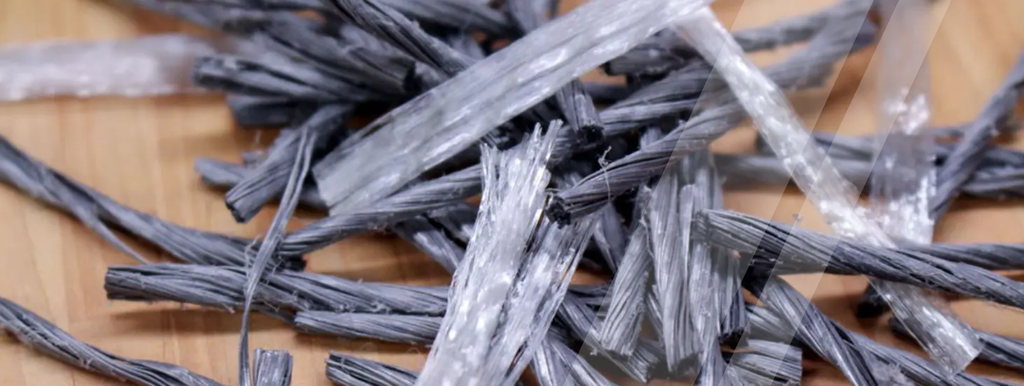
Fatigue resistance measures a pavement’s capacity to endure millions of load cycles without developing microcracks that can lead to structural failure. In high-stress areas where loads are repeatedly concentrated, maintaining high residual flexural strength after cracking is critical.
According to FORTA, a noncorrosive, nonmagnetic, and 100% acid- and alkali-proof reinforcement is required to improve load transfer and post-crack performance significantly. The company’s FORTA-FERRO Macro Fiber offers these benefits, serving as an effective alternative to traditional temperature and shrinkage reinforcement techniques.
Banked turns present a unique construction challenge. On steep embankments, gravity works against the placement crew, potentially causing fresh concrete to slump before curing. Fiber reinforcement must provide stability during placement and curing, not just after hardening.
Assess Mix Compatibility and Crack Control
Advanced fiber products deliver minimal value if they fail to integrate properly into the concrete matrix. Achieving a homogeneous distribution throughout the mix ensures consistent reinforcement across the entire slab.
The primary function of fiber reinforcement in racetrack applications centers on superior crack control. When fibers distribute evenly and bond effectively with the concrete matrix, they intercept crack propagation at the microscopic level. This translates to a longer-lasting surface that minimizes disruptive repairs and shutdowns.
For track operators, reduced maintenance frequency means more available racing days and lower life cycle costs. For contractors, mix compatibility affects placement efficiency and finish quality.
Consider Synthetic Fibers
Synthetic fiber technology represents an engineering advancement over traditional steel reinforcement methods for pavement applications. While steel mesh and rebar have served the construction industry for decades, synthetic fibers offer distinct advantages.
FORTA experts explain that these fibers meet and exceed standards and business codes established by the American Society of Testing and Materials, the American Concrete Institute, the Steel Deck Institute, and Underwriters Laboratories.
Synthetic fibers also provide a safer alternative to wire mesh for construction workers during placement. Steel reinforcement presents cut hazards and requires careful handling. Fiber reinforcement eliminates these risks by integrating directly into the concrete mix, reducing both injury potential and placement time.
Frequently Asked Questions
Racetrack pavement construction raises technical questions that extend beyond standard commercial paving considerations.
Why do racetrack pavements require a different reinforcement strategy than standard highways?
Standard highway pavement experiences distributed loads from varied traffic patterns. Racetrack surfaces endure concentrated, repetitive loads in specific zones where vehicles follow consistent racing lines. This concentration creates localized fatigue that requires reinforcement systems capable of managing both thermal stress and mechanical wear far beyond typical highway specifications.
How exactly does synthetic fiber reinforcement protect pavement from cracking and fatigue?
Synthetic fibers create a 3D network throughout the concrete matrix that intercepts crack propagation at the microscopic level. When internal stresses develop from thermal cycling or mechanical loading, the fiber network distributes them over a broader area rather than allowing them to concentrate at crack tips.
What are the primary advantages of using synthetic fibers over traditional steel reinforcement in paving applications?
Synthetic fibers integrate directly into the concrete mix, eliminating the positioning and securing steps required for steel mesh or rebar. This integration reduces placement time and the risk of worker injury while providing uniform reinforcement throughout the slab depth. Synthetic fibers also resist corrosion, maintaining their structural contribution throughout the pavement’s service life.
Accelerating Construction with Technical Expertise
Successful racetrack pavement construction depends on understanding the unique stress conditions involved, evaluating reinforcement materials using key performance metrics, and working with suppliers that provide technical engineering support. Advanced synthetic fiber reinforcement systems deliver measurable benefits when selected and installed in response to specific loading conditions and thermal environments at racing facilities. Achieving optimal results relies on both advanced materials and a partner with industry expertise to ensure correct specification and placement.
*Please note that this list includes sponsored content. Some of the companies, products, or services featured have entered into commercial agreements for placement. Sponsored placements do not necessarily reflect an endorsement and should be considered alongside other options in the marketplace.