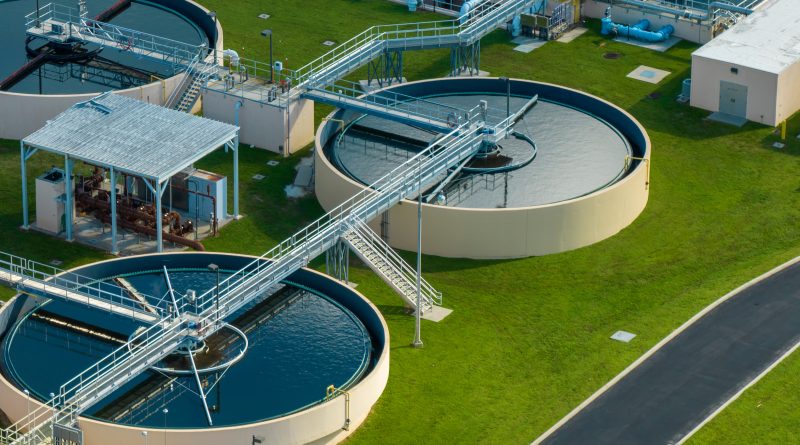
Retrofitting one of America’s largest PFAS water treatment facilities
Subscribe to our free newsletter today to keep up to date with the latest construction news.
The City of Dayton’s $350 million PFAS treatment program is far more than another municipal infrastructure contract. It represents one of the largest dedicated drinking water PFAS treatment projects ever undertaken in the United States and offers a glimpse into how utilities across the country may need to modernize aging facilities as new water quality standards reshape investment priorities.
While Shook Construction’s appointment as construction manager at risk attracted industry attention, the bigger story lies in how the project will be delivered. Retrofitting advanced treatment technology into a 70-year-old operating water treatment plant presents engineering, logistical and operational challenges that are increasingly common across North America. As municipalities respond to stricter PFAS requirements, Dayton’s Ottawa Water Treatment Plant could become an early blueprint for upgrading critical infrastructure without interrupting service to the communities that depend on it.
Why retrofit is becoming the defining challenge of PFAS compliance
The Ottawa Water Treatment Plant produces approximately 96 million gallons of drinking water each day and serves more than 430,000 people across the Dayton region. Rather than replacing the facility, the city has opted to integrate advanced PFAS treatment into existing infrastructure that has been operating for roughly seven decades. The overall delivery program is expected to extend across eight years, reflecting both the project’s technical complexity and the need to maintain continuous operations throughout construction.
That decision mirrors a broader challenge facing the US water sector. Much of the country’s drinking water infrastructure was built during the decades following World War II. Although many plants remain structurally sound, they were never designed to remove emerging contaminants such as perfluoroalkyl and polyfluoroalkyl substances, better known as PFAS or “forever chemicals.”
For many utilities, wholesale replacement is neither practical nor financially viable. Instead, owners are increasingly looking toward staged retrofits that introduce new treatment processes while preserving existing assets. This approach minimizes disruption for customers, extends the life of valuable infrastructure and can reduce overall capital costs, although it significantly increases delivery complexity.
Dayton also benefits from continuity in project development. Tetra Tech has worked with the city’s Department of Water for more than 20 years, allowing investigations into PFAS contamination, treatment planning and long-term infrastructure renewal to evolve into a coordinated delivery program rather than a standalone compliance project.
Delivering major construction inside a live treatment plant
Constructing a major treatment facility on an active site is fundamentally different from building on a greenfield location.
Every construction activity must be planned around the primary objective of maintaining safe, uninterrupted drinking water production. Existing process units continue operating while contractors introduce new treatment systems, install pipework, connect utilities and complete phased tie-ins. Temporary infrastructure often becomes as important as permanent works because treatment processes cannot simply be switched off while construction progresses.
Sequencing therefore becomes one of the project’s defining engineering disciplines. Individual work packages must be coordinated around operational windows, maintenance shutdowns and seasonal demand for water production. Space constraints inside an established treatment plant add another layer of complexity, requiring close coordination between designers, contractors and plant operators throughout construction.
The construction manager at risk delivery model is particularly well suited to this type of environment because it enables contractor involvement during design development, allowing constructability, phasing and risk management to influence engineering decisions before work begins on site. Early collaboration can reduce unforeseen clashes, improve sequencing and lower the likelihood of costly changes once construction is underway.
Brownfield infrastructure projects also bring uncertainties that are rarely encountered on new sites. Existing utilities may differ from historical drawings, buried services require careful verification and aging structures often reveal hidden conditions once demolition begins. Managing these risks demands flexibility, detailed planning and continuous communication across the project team.
A blueprint for the next generation of municipal water infrastructure
The significance of Dayton extends beyond Ohio.
Across the United States, utilities are evaluating how to comply with tightening PFAS requirements while managing facilities that are decades old. Many face the same combination of aging assets, limited space, operational constraints and increasing public expectations around water quality.
Projects such as Ottawa demonstrate that compliance is becoming as much a delivery challenge as an engineering one. Success will depend on integrating design, construction and operations into a single coordinated program rather than treating each phase independently.
The project also illustrates a broader shift in municipal infrastructure investment. Rather than focusing solely on regulatory compliance, owners are increasingly combining contaminant removal with wider asset renewal, resilience improvements and operational modernization. Delivering multiple objectives through a single long-term program offers greater value than isolated upgrades and creates infrastructure capable of serving communities for decades to come.
If Dayton’s delivery model proves successful, it may provide a practical reference for municipalities preparing their own PFAS treatment investments. As more utilities confront similar regulatory and operational pressures, the lessons learned from constructing one of the nation’s largest dedicated PFAS treatment facilities inside a live, 70-year-old water treatment plant could influence water infrastructure programs well beyond Ohio.
Source