Kraemer North America marks 115 years as its leaders guide growth, alternative delivery, and geographic expansion
Kraemer North America traces its roots to 1911, when a small crew in Plain, Wisconsin, began taking on local construction work. Over more than a century, that local footprint expanded into highways, bridges, rail infrastructure, and marine construction across the US. Today, the company operates across multiple regions and sectors while maintaining the culture of a family-founded business that now forms part of a global group.
That long history shapes how Kraemer’s leaders operate today. As infrastructure investment shifts and delivery models change, Kraemer adapts while staying true to its roots. Senior Vice Presidents Bob Beckel and Tim Maloney, along with COO Jeff Sautel and Vice President Brian Bellfi, set strategy and run operations across the company. Brian leads pursuits and alternative delivery projects, while Bob oversees operations across Minnesota, Wisconsin, and the surrounding regions.
Roots and reach
Kraemer’s growth followed the expansion of federal infrastructure programs, with bridge construction emerging early as a defining capability. That shift continues to shape its footprint today.
“As the US started investing in highways and bridges, that’s when Kraemer grew into a major bridge builder, focusing on structures and roadway work,” Brian shares. The company has since broadened beyond those early markets, building out its regional reach. He adds, “We’ve since expanded, building a strong presence throughout much of the Midwest alongside an active footprint in Washington.”
The path has not always been linear. As Kraemer grew its footprint from the Midwest to the Pacific Northwest and into eastern markets, leadership encountered the realities of rapid expansion. “We experienced significant growth in the early 2000s, expanding into the Mid-Atlantic and taking on several projects there,” Bob recalls. “Not all of those efforts went as planned.”
The response to that period reshaped how the company thinks about scale and risk. Rather than pursue reach at any cost, Kraemer narrowed its focus. “We refocused on our core areas, and since then, we’ve enjoyed steady, more controlled growth. We’re larger today than in 2006, and much wiser in how we approach business.”
People and leadership
As the market has shifted, the point both leaders return to is the workforce’s role in sustaining the business. Kraemer’s longevity, they suggest, is less about strategy alone and more about consistency in the people delivering the work. “A lot of our success comes down to our core employees and tradespeople. During the challenges of the early 2000s, some incredibly loyal people stuck with us through tough times,” Bob reflects.
That experience continues to shape how leadership thinks about continuity and accountability across the organization. Brian adds, “The simple answer is, we owe everything to our hardworking, dedicated team. We began as a family business, and that focus on people is the primary reason we’ve sustained our growth.”
Evolving delivery
Kraemer operates across transportation, rail, and marine markets, with its structure reflecting both technical focus and regional demand. That range allows the company to move between project types while maintaining alignment with client needs.
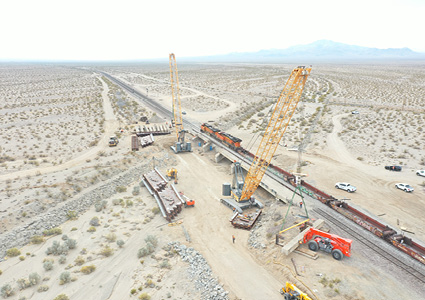
“Our rail group handles major heavy rail construction and bridge projects, going wherever our railroad clients need us,” Brian says. Alongside that mobility, teams specialize by geography and environment, shaping how work gets delivered across different regions. “We also have teams focused on marine work, above and below the waterline, while in Colorado, we take a heavy civil approach. In addition, we perform dam and lock projects for the U.S. Army Corps of Engineers,” he adds.
Alongside this operational breadth, delivery models play a defining role. Alternative delivery approaches, such as design-build and construction manager-general contractor (CMGC), have become central to Kraemer’s modern pipeline. “Over the past 15 years, Brian’s leadership has helped us succeed in the alternative delivery market,” Bob points out. “That’s propelled our growth.”
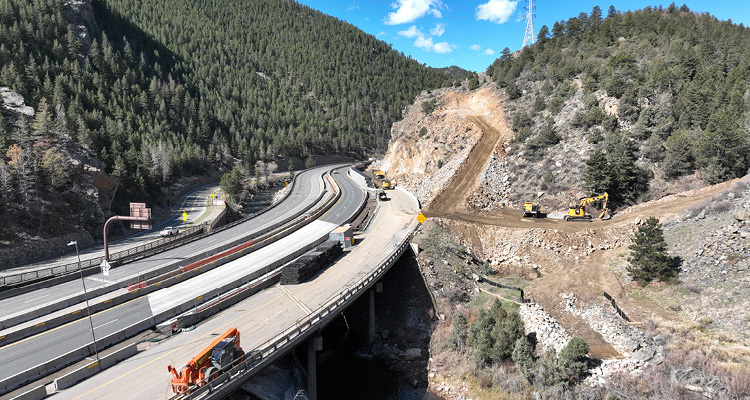
These collaborative methods require early integration with clients and partners, a shift that is a dynamic on full display in Kraemer’s current work in Colorado led by Tim Maloney. Brian explains: “The Floyd Hill project is a CMGC alternative delivery job, and we’ve partnered with the department for quite some time. It’s a mega-project with extensive excavation, rock work, blasting, segmental construction, and a major bridge, all happening at once.”
To support that level of execution, Kraemer continues to invest in the tools its teams rely on in the field. “We make sure our people have the best tools, and we care about sustainability too. That’s why we’re adding more electric vehicles to our fleet whenever we can,” Brian adds.
Bob agrees. “In the past decade, we’ve replaced most of our old equipment and invested heavily in new machinery.”
Projects and growth
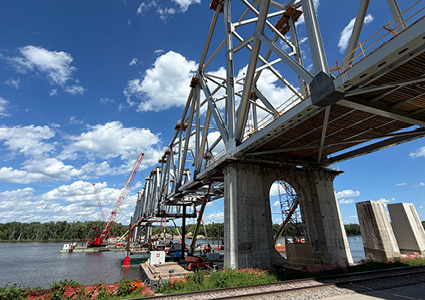
Kraemer’s current project portfolio highlights this intersection of capability and strategy. “We’re building a new river crossing over the Mississippi from Lansing into Wisconsin. We’ve received the final shipment of structural steel, and the erection of the new bridge is going smoothly,” Bob confirms. At the same time, Kraemer is removing the old bridge beside it. “We plan to finish the steel erection by the middle of this year and open to traffic at the end of the year.”
Other projects carry that workload into brand-new corridors. In Washington State, Kraemer recently secured a win on the SR 167 corridor. “It is a major project in Washington,” Brian notes. The work includes highway widening, interchange completion, and the connection of Interstate 5 to 167. “We’ll also construct a unique pedestrian bridge over the interstate, which is an exciting new challenge for our team.”
Further north, Kraemer’s rail division is preparing to begin construction on a contract in Rainy River, Minnesota, right on the US-Canada border, with boots on the ground in late 2026. At the same time, the company is aggressively pursuing large-scale opportunities like the landmark Blatnik Bridge design-build project in Duluth, a long-planned replacement crossing that will reshape a key regional freight corridor.
Even with plenty of work lined up, Kraemer takes a careful approach to growth. “We aim to keep strengthening our core regions,” Brian says. The company is considering careful expansion into the mid-Southeast, including states like Tennessee, where opportunities make sense. “We’re branching out further into hydro and dam work and reaching more private clients.”
More than a century after that first crew broke ground in Plain, Wisconsin, Kraemer’s formula remains the same: grow carefully, invest in people, and let the work speak. For Brian and Bob, the next era looks a lot like the last one – earned, not rushed.