IPD responds to supply chain shifts, AI adoption, and changing customer needs globally
The heavy-duty engine aftermarket is evolving rapidly. Trade routes are shifting, tariffs are changing sourcing decisions, and geopolitical events can disrupt supply chains overnight. At the same time, customers expect greater visibility, faster response times, and partners who deliver more than just parts. In industries like oil and gas, mining, transportation, and power generation, being responsive is now part of the value chain.

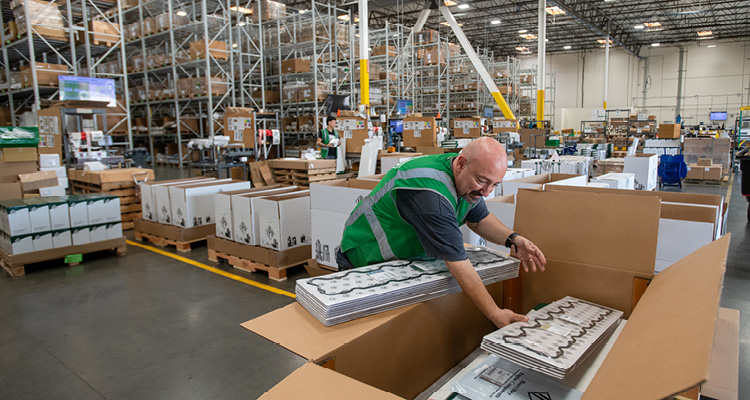
For IPD, that pivot reinforced a way of thinking that’s been in the company’s DNA since 1955. Today, the company designs, manufactures, and distributes aftermarket engine parts for heavy-duty diesel and natural gas engines used across oil and gas, mining, construction, transportation, marine, and power generation applications. Its portfolio includes components such as pistons, cylinder liners, gaskets, bearings, and engine kits that help customers rebuild and extend the life of critical equipment.
Serving customers in over 100 countries and manufacturing products across more than 20 countries, IPD supplies engine rebuilders, distributors, and equipment operators around the world. As President, Michael Badar is steering the company’s investment in technology, supply chain flexibility, and market expansion while preserving the agile mindset that has supported its growth for more than 70 years.
As part of Storm Industries, Michael balances long-term strategy with day-to-day execution. That responsibility is even more important now, since markets shift so quickly and there’s no room for hesitation.
IPD started with an entrepreneurial vision. Walter Storm and Bob Rasmussen founded the company as a gasket supplier, then expanded the product line and global reach. Today, IPD operates out of Carson, California, with additional facilities in Houston, Cleveland, Denmark, Dubai, and Australia.
“It really was Walter’s dream to start a company. He was a true entrepreneur and managed the business side, while Bob focused on the technical end. The sun never sets on IPD these days,” he says.
That entrepreneurial streak is still easy to spot at IPD. Today’s market, with its supply chain challenges and shifting trade routes, pushes the company to embrace the agility that’s always set it apart. Instead of using its heritage as an excuse to stand still, IPD treats its history as a launchpad for change.
For Michael, the issue wasn’t whether things were shifting. It was how fast IPD could adapt while customers faced the same uncertainty. Tariffs brought new challenges across international markets, and customers searched for ways to keep things running smoothly. The leadership team had to decide how to act without waiting for perfect clarity. “The neighborhood changed, so we’re looking ahead. We may be 70 years old, but I tell people we’re a 70-year-old startup. We have the foundation of an established company, but we must think and move like a startup: agile, innovative, and ready to seize opportunities.” That mindset led to the company’s ‘What’s Next?’ initiative, focusing on technology, customer experience, product development, supply chain resilience, and investing in great people.
Innovation and flexibility
AI is becoming a bigger part of IPD’s strategy. Instead of seeing AI as something for the future, IPD puts it to work in everyday business processes where speed and visibility make a difference.
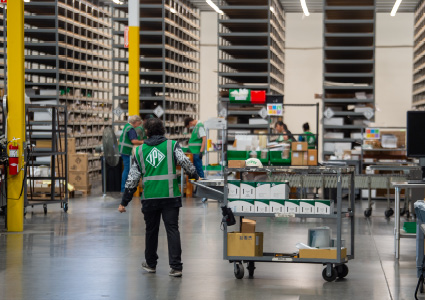
Managing more than 60,000 SKUs is complex. It touches inventory, order fulfillment, sourcing, engineering, and customer support. AI and data analytics now help streamline inventory management, sourcing, engineering reviews, warranty analysis, and operational planning, allowing employees to spend more time solving customer problems rather than performing manual tasks. Michael explains: “We use AI every morning to see what we have, what we can ship, and what’s ready to go. What used to take hours now takes about five minutes.”
Sometimes, small adjustments make the biggest difference. After reviewing warehouse movement and order history, IPD’s operations manager found a simple way to boost productivity in Carson. “My operations manager built a model to cut steps in the warehouse,” Michael recalls. “He mapped out where everything is and analyzed our layout and orders from the past year. Quickly, he figured out that relocating just 250 high-volume SKUs would save 500 miles of walking each year.”
For Michael, examples like these show the broader opportunity. “From a logistics and supply chain perspective, we’re just scratching the surface. AI is perfect for pulling together all this different data and making sense of it.” Those supply chain capabilities are more important than ever as global disruption becomes the norm.
In recent years, IPD has expanded its distribution network to put products closer to customers and create options when trade routes or policies change. Facilities in Denmark and Dubai add flexibility that’s proved valuable during tariff disruptions and shipping challenges.
IPD’s ability to shift inventory, reroute shipments, and react to local needs isn’t accidental. It comes from a strategy that focuses on depth in the right markets, not just covering the globe. Instead of trying to expand everywhere, IPD targets markets where demand and development trends create opportunities. Michael notes, “Rather than shot gunning around the world, we pick a country and focus there, making sure we dedicate resources and win. We might spend a year or two building up two neighboring countries, then plant our flag and move on to the next opportunity.”
Regional needs shape how IPD develops products. “We look at each part of the world and ask what we need to make and sell so we can serve every customer base fully.”
You can see that customer focus in IPD’s engineering philosophy. Instead of just copying OEM designs, the team looks for ways to solve real-world problems customers face.
Michael highlights developments like one-piece piston designs, raised-edge liners, cryogenically treated head bolts, and chromoly steel liners as proof that customer feedback drives innovation. “Our goal isn’t to copy OEM parts,” he says. “It’s to solve problems OEMs either haven’t addressed or can’t address for the aftermarket.”
Michael believes real results come from people who turn insight into action. “It starts with listening to customers. Our regional managers worldwide do more than sell parts; they act as business consultants, showing companies how we can both succeed.” IPD’s forward-thinking philosophy shapes the entire company culture. For Michael, purpose is a big part of IPD’s identity. “Our people are our competitive advantage. They know the products, understand our customers’ business, and solve problems every day.”
Despite all the talk about technology, logistics, and market expansion, Michael believes IPD’s purpose is simple. “It’s not just a part in a box. That part goes to a distributor or rebuilder, who puts it on a machine or truck that delivers food, hauls lumber, or digs a hole for new sewers or roads. It’s the best kind of recycling you can imagine.”
As IPD keeps investing in technology, product development, geographic expansion, and customer experience, Michael stays focused on adaptability as a core business discipline, not just a reaction to change. “I see IPD as the agile player in our industry,” Michael concludes. “Anticipating change, responding quickly, and helping customers succeed no matter how the market evolves.”