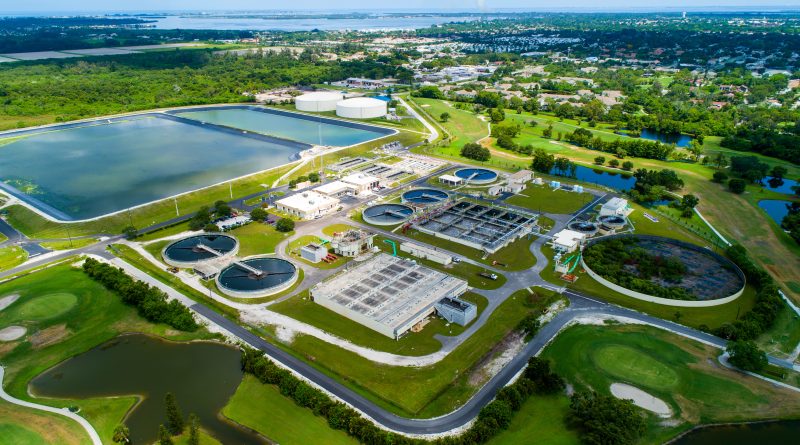
Inside Florida’s largest wastewater infrastructure project
Subscribe to our free newsletter today to keep up to date with the latest construction news.
Florida’s construction sector continues to absorb the effects of rapid population growth, expanding utility demand and mounting pressure on aging infrastructure. In Hillsborough County, those trends are converging in a single project that is rapidly becoming one of the most closely watched water infrastructure developments in the US construction market.
Garney Construction has officially broken ground on the One Water Project, a $1.2 billion wastewater infrastructure program that county officials describe as the largest capital improvement project in Hillsborough County history. While the investment itself is significant, the project also reflects broader changes taking place across heavy civil construction, where utility resilience, water reuse and long-term scalability are beginning to shape procurement strategies and construction delivery models nationwide.
The scale of the development places it firmly within megaproject territory. The scheme includes a new advanced wastewater treatment facility, a major lift station system and more than 20 miles of wastewater and reclaimed water pipeline infrastructure. Construction activity is expected to continue through the end of the decade, with initial operations targeted for 2028 and full completion planned for 2030.
For contractors operating in the utility and civil sectors, the One Water Project offers a clear snapshot of where municipal infrastructure spending is heading.
Population growth and water demand are reshaping construction priorities
Florida remains one of the fastest-growing states in the country, placing increasing strain on water treatment systems originally designed for far smaller populations. Municipalities across the state are now confronting the combined challenge of expanding capacity while modernizing outdated infrastructure.
That pressure is helping drive a new generation of large-scale wastewater and reclaimed water projects, particularly in high-growth counties surrounding Tampa, Orlando and South Florida. The Hillsborough County initiative sits directly within that trend.
At the center of the project is a 24 million gallon-per-day advanced wastewater treatment facility designed with future expansion capacity to 30 million gallons per day. The project also includes a 54 MGD super lift station intended to strengthen long-term system reliability across the county’s southern service area.
From a construction perspective, the project demonstrates how utility infrastructure is increasingly being approached as a regional resilience investment rather than a standalone public works upgrade.
Reclaimed water infrastructure has become especially important as municipalities search for ways to reduce pressure on freshwater resources. The inclusion of reclaimed water pipelines throughout the One Water Project highlights the growing role reuse systems are expected to play in future utility planning.
For contractors and engineering firms, this shift is creating new demand for highly specialized delivery capabilities, particularly in complex underground utility work, treatment facility construction and integrated water systems.
Progressive design-build continues gaining traction on megaprojects
One of the most notable aspects of the One Water Project is the delivery structure itself.
Garney is leading the program through a progressive design-build model alongside engineering partners Hazen & Sawyer, Ardurra, Stantec and Wade Trim. The collaborative structure reflects a broader movement within heavy civil construction toward integrated project delivery methods that allow owners and contractors to manage risk more effectively on highly complex infrastructure developments.
Progressive design-build has gained momentum in the water sector over the past several years because of its ability to accelerate schedules while improving coordination between design and construction teams. Rather than separating engineering and construction procurement into rigid phases, the model allows teams to refine scope, pricing and constructability throughout project development.
For a project of this scale, that flexibility becomes critical.
The One Water Project combines vertical treatment facility construction with extensive underground utility installation spread across active service corridors. Sequencing work across multiple sites while maintaining operational continuity requires significant coordination between contractors, engineers and county stakeholders.
Pipeline construction reportedly began in late 2025, with major vertical construction now ramping up. As activity accelerates, crews will face the typical challenges associated with large-diameter utility installation in fast-growing suburban environments, including traffic management, environmental controls and schedule compression.
The treatment facility itself also introduces additional complexity. Advanced wastewater treatment plants require sophisticated mechanical, electrical and process systems integration, often involving extensive commissioning and testing phases before full operations can begin.
For construction firms pursuing future utility megaprojects, the project offers a strong example of how collaborative procurement models are becoming increasingly important in managing technical and logistical risk.
Water infrastructure is emerging as a long-term growth sector
The One Water Project also signals something larger for the broader construction economy.
Federal infrastructure funding, combined with local population growth and environmental regulation, is creating sustained momentum behind water and wastewater investment across the US. While transportation and energy projects often dominate infrastructure headlines, utility construction is quietly becoming one of the industry’s most stable long-term sectors.
That trend is expected to continue as municipalities confront decades of deferred maintenance alongside rising climate resilience demands.
For contractors, the implications are substantial. Large-scale water infrastructure projects typically involve long construction schedules, specialized engineering requirements and recurring investment cycles that create sustained opportunities across civil, mechanical and industrial construction disciplines.
At the same time, owners are increasingly prioritizing procurement models that emphasize collaboration, scalability and lifecycle performance rather than lowest-cost delivery alone.
The Hillsborough County development reflects all of those shifts simultaneously. It combines major utility expansion, reclaimed water integration, phased scalability and progressive design-build delivery within a single long-duration infrastructure program.
As construction activity expands through 2030, the project will likely remain an important benchmark for how municipalities and contractors approach the next generation of utility megaprojects across the US market.
Source