ICON raises $200 million as Titan 3D printers enter the market
Subscribe to our free newsletter today to keep up to date with the latest construction news.
US construction technology company ICON has raised $200 million in Series D financing to expand production of its Titan 3D printers and accelerate the commercialization of robotic construction technology for homebuilders.
The funding round, announced on October 13, 2026, was co-led by investment management firm Baillie Gifford and funds managed by BlackRock. The investment will support Titan manufacturing in Austin, Texas, a new research and development facility and expansion into additional US markets.
The financing marks a shift in ICON’s business strategy as the company moves beyond developing and operating its own construction projects toward supplying automated building systems directly to contractors. ICON reports that its revenue is on track to quadruple in 2026, supported by growing interest in construction automation and a portfolio exceeding 270 completed homes and structures.
ICON expands Titan production as construction robotics gains ground
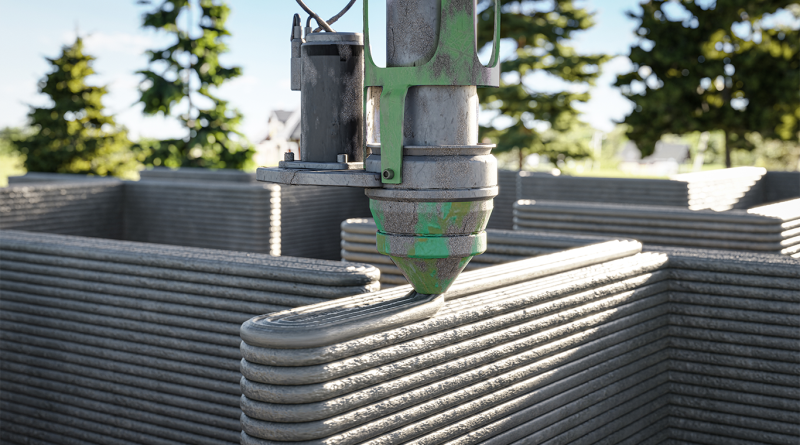
ICON’s Titan system uses large-scale additive manufacturing to construct building walls by depositing successive layers of proprietary cement-based material according to digitally controlled designs.
The robotic platform combines ICON’s FormCrete material with its BuildOS software, allowing operators to manage printing operations, monitor production and coordinate construction processes. The technology is intended to reduce manual labor requirements while improving consistency across repetitive building tasks.
In March 2026, ICON announced plans to make Titan commercially available to third-party builders, with initial deliveries anticipated in early 2027. The offering includes robotic equipment, software, printing materials, operator training and technical support, providing contractors with an integrated construction system rather than standalone machinery.
Listed at $899000, Titan represents a substantial equipment investment for construction companies. Its commercial appeal will depend on whether contractors can maintain sufficient project volumes to offset acquisition, transportation, maintenance and operating costs.
The latest funding will support dedicated manufacturing operations in Austin as ICON prepares to increase Titan production and expand distribution. The company is also investing in further research into automated construction technologies, including its longer-term development of systems intended for more complex building applications.
By supplying equipment to independent builders, ICON could expand its commercial reach without assuming responsibility for managing every project. This approach would create opportunities for recurring revenue through materials, software and technical services while allowing contractors to incorporate 3D printing into their existing operations.
Lower construction costs remain central to Titan’s commercial appeal
ICON claims its Titan technology could reduce wall-system construction costs by approximately 40% compared with conventional methods, with projected costs of around $20 per square foot. The company also estimates that automated printing could shorten the construction schedule of an average home by approximately six weeks.
These figures are based on ICON’s engineering models and projected operating conditions rather than independently verified savings across completed commercial developments. Actual results will depend on building design, equipment utilization, material costs, local labor rates and regulatory requirements.
Although 3D printing can automate substantial portions of wall construction, foundations, roofing, plumbing, electrical installations and interior finishing generally remain dependent on conventional building methods. Savings achieved during wall production therefore cannot be applied directly to the total cost of a completed home.
The economics of construction automation are particularly relevant as US homebuilders face persistent labor shortages and pressure to improve productivity.
Research published in 2025 by the Home Builders Institute and the National Association of Home Builders estimated that skilled labor shortages imposed an annual economic cost of approximately $10.8 billion on the residential construction industry. The research attributed $2.7 billion to increased financing and carrying costs from construction delays, with another $8.1 billion associated with the equivalent of approximately 19000 single-family homes not built in 2024.
Robotic construction systems could reduce dependence on labor-intensive wall-building processes, although contractors must still employ trained operators and coordinate automated equipment with conventional trades.
ICON also promotes FormCrete’s structural performance, reporting printed wall systems engineered for wind resistance above 175 mph and fire resistance exceeding two hours. Such specifications remain subject to project-specific engineering, regulatory approval and verification under applicable building standards.
ICON’s expansion reflects a wider shift toward commercial 3D printing
ICON has demonstrated its construction technology through residential developments, community housing initiatives and government infrastructure projects, including its partnership with Lennar on the Wolf Ranch development in Georgetown, Texas.
The company has undertaken construction work for military facilities and continues developing lunar construction technology through its NASA-backed Project Olympus initiative. These projects demonstrate the range of applications being investigated, although individual deployments do not establish the economic viability of widespread commercial adoption.
ICON’s move into equipment manufacturing follows a business model already pursued by companies such as Danish construction 3D printer manufacturer COBOD, whose systems are operated by independent contractors on residential and commercial developments.
Competition between construction technology manufacturers is increasingly centered on equipment reliability, material performance, operational costs and the ability to integrate robotic systems into established building processes.
For developers, the decision to adopt construction 3D printing involves more than purchasing machinery. Equipment must operate consistently across different sites, comply with local building regulations and deliver measurable savings against conventional construction methods.
ICON’s $200 million investment provides substantial resources to expand manufacturing capacity and commercial distribution, but the next test will be whether independent contractors can reproduce the company’s projected productivity improvements under routine construction conditions.
The wider adoption of robotic building systems will depend on predictable operating costs, consistent construction quality and sufficient demand to justify the investment, determining whether technologies such as Titan become established construction equipment rather than specialized tools for selected developments.
Source:
3D Printing Industry