How modern communications tools can make construction safer and more productive. By Adam Gould, CEO, Lynq Networks
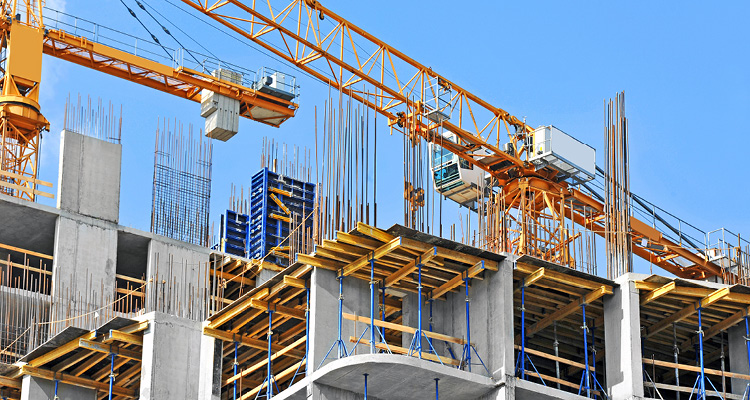
Walk onto any major construction project and the complexity is immediately obvious. Dozens of trades share the same space, hundreds of people move equipment and materials simultaneously, and activity extends across multiple floors or acres, all while deadlines tighten and projects grow larger. In this kind of environment, one thing determines whether work flows efficiently or breaks down: how well teams communicate.
The cost of miscommunication
Despite advances in digital design and project management software, the industry continues to battle costly inefficiencies once crews reach the field. Research from Autodesk and FMI shows that 52 percent of all rework stems from poor data and miscommunication, adding up to more than $31 billion each year in avoidable costs. Altogether, inefficient communication and data handling contribute to an estimated $177 billion productivity gap across US construction.
That impact shows up not only in budgets but also in safety statistics. Confused instructions, late updates, or lost signals can lead to workers performing tasks from outdated information or misaligned sequencing. In a business where precision and coordination are everything, unclear communication is both a productivity and a safety risk.
Why conventional tools struggle
Job site communication has changed little in decades. Crews rely on push to talk radios, cellular phones, or Bluetooth devices that were never engineered for the noise, movement, and size of modern projects. Each of those tools carries a limitation:
- Limited range: Bluetooth enabled headsets and equipment have limited range and don’t support scalable deployments.
- Infrastructure dependence: Cellular networks and access points can be overwhelmed or unavailable in dense structures or remote locations.
- Concurrency limits: Most of the existing technologies don’t have an actual large group talk functionality, as they only support one talker at a time with limited user capacity.
- Hands on operation: Push to talk or dial to connect systems take workers’ hands and attention away from tools or machinery.
When communication tools create friction, crews improvise by driving across sites to relay messages, relying on hand signals, or shouting over machinery. The result is lost time, safety issues and, too often, rework that could have been prevented with a clear, real time conversation.
New directions in job site communication
Recent technological progress offers a path forward. Several emerging communication approaches, already proven in other demanding industries such as defense, energy, and logistics, are now adaptable for construction.
Decentralized or “mesh” communication networks are gaining attention. In a mesh system, each device connects directly to others nearby. Signals hop automatically from unit to unit rather than through fixed infrastructure such as towers or base stations. This configuration allows coverage to expand as more users join and keeps crews connected even inside steel structures or underground areas where cellular coverage drops. Mesh networks have been deployed successfully in military and emergency response settings that share many of the same environmental challenges as construction.
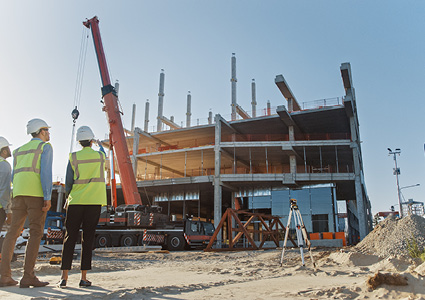
Another improvement is the adoption of full duplex voice communication, which is technology that enables users to talk and listen at the same time, much like a natural conversation. Eliminating the push to talk delay is especially valuable in operations that require continuous feedback, such as crane signaling, concrete placement, or equipment spotting. Continuous, hands free voice also helps maintain situational awareness, reducing the cognitive load and physical gestures that contribute to fatigue.
Additionally, integrating communication capability directly into protective wear, for instance, hearing protection headsets or helmets, means workers can stay connected without removing gear or stopping to operate a device. In high noise environments, that makes a measurable difference in both safety compliance and responsiveness.
Emerging embedded communication platforms — the kind now being integrated directly into next generation PPE and industrial wearables — are making these capabilities practical at scale.
The data connection
Reliable field communication is also a prerequisite for the next phase of construction digitization. The industry is moving toward interconnected networks of sensors, vehicles, and equipment that share data in real time. For those systems to deliver value, people must stay connected to the same network infrastructure as the machines. Low latency, local communication networks can bridge that gap, ensuring human and machine data flows through a common channel.
Better communication doesn’t just transmit voices; it transmits context. When the same network supports quick file or data sharing, such as updated plans or checklists, supervisors can verify task completion without walking the entire site, and project managers can synchronize updates instantly between office and field tablets. It’s the practical side of digital transformation: closing the final information gap between the trailer and the trench.
Safety through connectivity
Clear communication is one of the core indicators of a mature safety culture. According to the Occupational Safety and Health Administration, many incident types, from struck by hazards to crane and rigging accidents, stem from breakdowns in signaling or coordination. While technology doesn’t replace training, it ensures that established procedures are heard, acknowledged, and reinforced in real time.
Being able to relay warnings instantly and confirm that the message was received eliminates the ambiguity that often precedes accidents. When crews share an always on communication channel, it becomes easier to maintain spacing, alert others to load movements, and coordinate emergency responses, all without waiting for a radio cue or phone ring.
A measurable opportunity
The construction industry will always carry inherent complexity, but the tools that manage that complexity are changing. As companies adopt more advanced communication systems, wired less like a call center and more like a local mesh of connected professionals, they will see gains similar to what digital design brought to preconstruction: fewer errors, faster decisions, and greater predictability.
Reducing even a small fraction of today’s rework rate would recapture billions of dollars, improve margins across contractors, and, most importantly, send more workers home safely.
Contractors evaluating new communication systems should prioritize full duplex capability, mesh coverage, and integration into existing protective gear — the features most strongly correlated with safety and productivity gains.
Solving the industry’s efficiency challenge isn’t only about better data; it starts with ensuring that the message always gets through.
Being able to relay warnings instantly and confirm that the message was received eliminates the ambiguity that often precedes accidents. When crews share an always on communication channel, it becomes easier to maintain spacing, alert others to load movements, and coordinate emergency responses, all without waiting for a radio cue or phone ring.
A measurable opportunity
The construction industry will always carry inherent complexity, but the tools that manage that complexity are changing. As companies adopt more advanced communication systems, wired less like a call center and more like a local mesh of connected professionals, they will see gains similar to what digital design brought to preconstruction: fewer errors, faster decisions, and greater predictability.
Reducing even a small fraction of today’s rework rate would recapture billions of dollars, improve margins across contractors, and, most importantly, send more workers home safely.
Contractors evaluating new communication systems should prioritize full duplex capability, mesh coverage, and integration into existing protective gear — the features most strongly correlated with safety and productivity gains.
Solving the industry’s efficiency challenge isn’t only about better data; it starts with ensuring that the message always gets through.
Adam Gould
www.lynqnetworks.com
The success of any device starts with the quality of its connectivity, and developing a winning product requires unique, value-adding differentiation. Unlike existing technologies such as 5G and Bluetooth, Lynq Networks’ wireless networking solutions enable leading OEMs to build in this differentiation, allowing them to create their own large area networks of connected devices.