Construction spending weakens as data centers surge ahead
Subscribe to our free newsletter today to keep up to date with the latest construction news.
US construction spending weakened again in July, but the headline decline hides a sharper divide inside the market. Total construction spending fell 0.5% from June to a seasonally adjusted annual rate of $2.1576 trillion, according to the US Census Bureau, while spending was 3.8% below July 2025 levels.
Private construction fell 0.5% during the month, led by a 1.3% decline in residential spending, while public construction slipped 0.2%. Private nonresidential work moved in the opposite direction, rising 0.4%, but that figure gives an incomplete picture of underlying demand because growth was concentrated in a narrow group of projects.
Data centers are carrying a growing share of nonresidential activity
Associated Builders and Contractors calculated that total nonresidential construction spending increased 0.1% in July to an annualized $1.286 trillion. Eight of the 16 nonresidential categories declined during the month, and ABC Chief Economist Anirban Basu said the entire increase in nonresidential spending was attributable to data centers.
Without that category, nonresidential spending fell for a second consecutive month and reached its lowest level since September 2023, showing how sharply construction investment has shifted toward computing infrastructure.
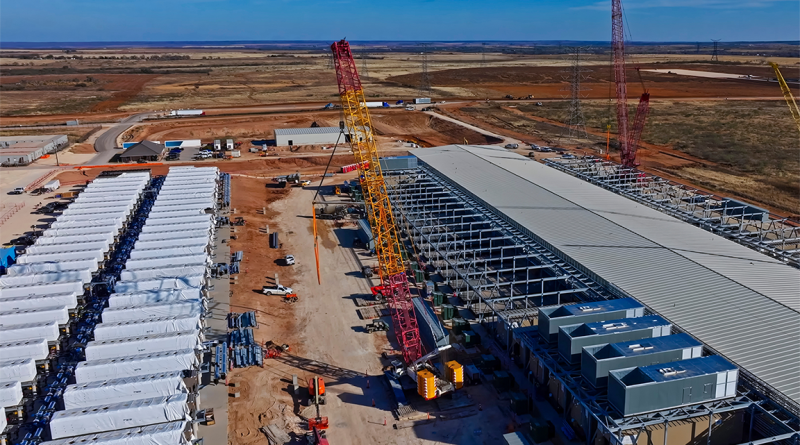
KPMG estimates that data center construction spending reached an annualized $75.2 billion in July, a record level. Spending increased 6.2% from June and 57% from a year earlier, making data centers one of the fastest-growing areas of the construction economy.
Demand is tied closely to the capital programs of cloud providers and technology companies building infrastructure for artificial intelligence, cloud computing and high-density digital services. The effects stretch well beyond the facilities that house servers because data centers require large electrical connections, cooling systems, backup generation, substations and specialized mechanical infrastructure.
That demand can support electrical contractors, engineering firms, equipment manufacturers and specialty trades even when conventional office, retail or industrial projects are slowing, and the relationship is becoming increasingly visible in national construction data.
KPMG estimates that combined public and private power construction reached an annualized $181.5 billion in July, compared with $169.8 billion for manufacturing construction. The gap is notable because the two categories are moving in different directions, with private power infrastructure spending increasing 0.5% in July and 6.5% from a year earlier while manufacturing construction fell 0.8% during the month and was 22% lower than a year earlier.
Part of the rise in power spending reflects the electricity requirements associated with large computing facilities. ABC’s analysis suggests that the apparent resilience of nonresidential construction becomes weaker once data centers and their related power requirements are separated from the broader market.
Housing and manufacturing show how uneven the market has become
Residential construction remains one of the clearest sources of weakness, with private residential spending falling 1.3% in July to an annualized $859 billion. KPMG reported that residential construction spending was 7.3% below year-earlier levels, while new single-family construction fell 3.2% for the month.
Higher borrowing costs continue to restrain the housing market, limiting project volumes and making affordability more difficult for buyers. Manufacturing construction is going through its own correction after large investments in semiconductor plants, battery facilities and other factories made the category one of the strongest areas of construction earlier in the decade.
That momentum has faded. July marked another monthly decline, leaving manufacturing construction spending 22% below its level a year earlier.
The divergence matters for contractors and suppliers because aggregate construction figures can give a misleading impression of demand. Companies exposed heavily to data centers, electrical systems or power infrastructure may be working through strong backlogs, while businesses serving housing, traditional manufacturing or other commercial categories may be experiencing a much weaker market.
The result is less a unified construction cycle than a collection of increasingly separate markets, and cost pressures make the division more difficult to manage. KPMG reported that input prices for new construction were 7.2% higher than a year earlier, excluding labor, while metals prices remained elevated and diesel costs increased the expense of transporting materials and equipment to project sites.
Construction companies are therefore facing weaker spending in many categories at the same time that project costs remain high. That combination can compress margins, delay projects and make customers more selective about capital commitments.
A construction market concentrated around data centers carries its own risks
Data center spending can support contractors, manufacturers and infrastructure companies for years, particularly as computing demand increases and utilities invest in new capacity, but concentration creates a different type of exposure.
Large data center projects depend on reliable electricity supply, grid connections, land availability, permitting and access to specialized labor. In markets where those resources are scarce, proposed projects can face longer development periods, higher costs or both.
Power availability may become one of the biggest constraints as the electricity requirements of large data center campuses force developers and utilities to reconsider where projects can be built and how quickly new generation and transmission capacity can be connected.
Labor presents another challenge because electrical workers, mechanical contractors and other skilled trades required for data center projects are already in high demand. A continued wave of construction could intensify competition for workers and increase labor costs in regions with multiple large projects.
Local scrutiny may create another limitation as communities pay closer attention to land use, electricity demand, water consumption and the economic benefits associated with large computing facilities. Those pressures do not indicate an immediate end to the data center construction cycle, but they show why contractors should be cautious about interpreting rapid investment in one category as evidence of broad market strength.
July’s construction figures point to two distinct market conditions. Total spending is falling, residential activity remains weak and manufacturing construction is retreating from earlier highs, while computing and electrical infrastructure are generating billions of dollars in new construction demand.
For companies planning capacity, hiring workers or buying equipment, the distinction matters because the strongest opportunities in US construction are becoming concentrated around a smaller group of capital-intensive projects.
If data center investment continues at its current pace, those projects may keep portions of the nonresidential market growing even as other categories contract. The larger question is whether one of construction’s fastest-growing sectors can continue carrying such a large share of the market as costs, labor requirements and power constraints become harder to manage.
Source:
KPMG