Construction costs keep climbing despite a slower market
Subscribe to our free newsletter today to keep up to date with the latest construction news.
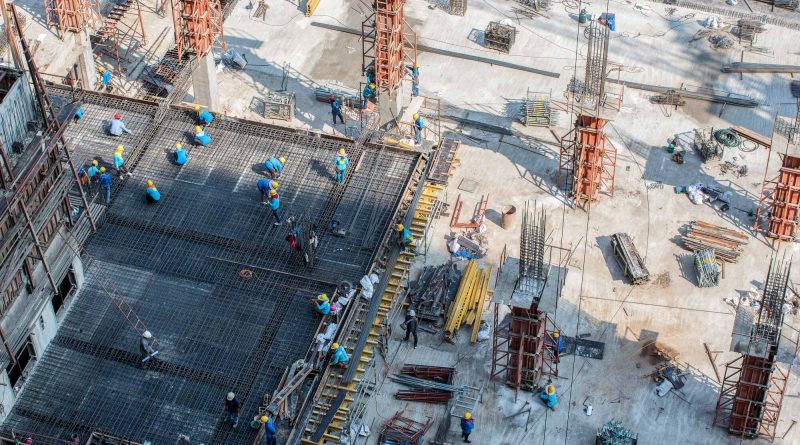
Construction costs continue to rise in 2026 despite signs of slowing activity across parts of the commercial real estate market. At first glance, that appears contradictory. Total construction spending has softened, financing remains expensive and many developers have delayed projects. Yet owners continue to face higher bids, longer procurement timelines and growing uncertainty around project budgets.
The explanation lies beneath the headline numbers. Today’s construction market is no longer moving in one direction. Instead, it has split into distinct sectors, with unprecedented investment in data centers, energy infrastructure and advanced manufacturing placing sustained pressure on labor availability, specialist subcontractors and critical materials. Those pressures are influencing projects well beyond the industries driving demand.
JLL’s latest Construction Outlook Report highlights how tariffs, supply chain disruptions and labor shortages have pushed construction cost growth above earlier forecasts. The firm’s final cost indices increased about 5% year over year, with additional acceleration expected during the second half of 2026. At the same time, contractor availability varies widely depending on market exposure to high-growth sectors.
For project owners, the result is a more complex procurement environment. Broad market indicators no longer provide an accurate picture of pricing or contractor capacity. Instead, successful projects increasingly depend on understanding where demand is concentrated, which cost pressures are temporary and which have become structural.
Data center demand is reshaping construction economics
The rapid expansion of artificial intelligence infrastructure has become one of the defining forces in today’s construction market. Data centers require highly specialized mechanical, electrical and cooling systems while consuming significant volumes of steel, concrete, switchgear and backup power equipment. Just as importantly, they require the same skilled trades that support office buildings, industrial facilities, healthcare projects and mixed-use developments.
JLL’s research illustrates this growing divide. Contractors actively serving the data center market reported average backlogs of 12.2 months compared with 8.3 months for contractors without similar exposure. The difference represents more than fuller order books. It reflects where skilled labor, specialist subcontractors and construction capacity are increasingly committed.
This imbalance has created two distinct construction markets operating simultaneously. Firms heavily involved in digital infrastructure often have little flexibility to pursue conventional commercial work, while contractors outside those sectors may still compete aggressively for new opportunities.
That divergence creates an opening for owners planning traditional commercial developments. Office, logistics and mixed-use projects may encounter stronger competition among general contractors than headline market conditions suggest. However, the opportunity is highly regional. Markets experiencing significant investment in hyperscale data centers or advanced manufacturing continue to face tighter labor availability and longer procurement schedules than regions with more balanced demand.
Understanding local contractor backlogs has become as important as monitoring national construction spending. Two projects with similar specifications can experience very different pricing simply because they compete for different labor pools and specialist trades.
Higher costs are becoming the industry’s new baseline
Material pricing has always fluctuated, but several of today’s cost drivers appear more durable than previous market cycles.
Trade policy continues to affect imported steel, aluminum and other construction materials, increasing uncertainty around procurement strategies for projects with significant structural or mechanical components. Material suppliers have also faced higher transportation and energy costs, while contractors continue to incorporate pricing contingencies into bids to account for future volatility.
Labor remains the industry’s most persistent challenge.
JLL estimates that construction employment growth has slowed to 0.6% in 2026 compared with a historical average of 2.7%. At the same time, the firm projects that nearly three-quarters of US metropolitan markets could face construction labor constraints during 2027. Those shortages cannot be resolved as quickly as commodity price movements because developing experienced electricians, mechanical specialists and project supervisors requires years rather than months.
Federal employment data reinforces the broader trend. Construction employment continues to grow modestly while average hourly earnings have increased steadily throughout the year. Rising wages reflect sustained competition for qualified workers rather than short-term inflationary pressures.
For contractors, these conditions encourage more disciplined bidding. Rather than accepting lower margins to secure work, many firms are becoming increasingly selective about the projects they pursue. Owners may therefore encounter fewer bidders despite softer construction spending across certain sectors.
A selective procurement strategy can create an advantage
Although cost pressures remain elevated, project owners are not without options.
Overall construction spending has moderated during 2026, creating opportunities for developers whose projects are not directly competing with large-scale digital infrastructure or manufacturing investments. Some contractors continue to seek work outside those sectors, particularly in markets where commercial development has slowed.
Capturing that opportunity requires earlier planning rather than delayed decision-making.
Owners can improve pricing certainty by engaging contractors during design development instead of waiting until documentation is complete. Early contractor involvement provides better visibility into material availability, identifies long-lead equipment before procurement becomes critical and allows design adjustments before pricing is finalized.
Procurement strategies should also distinguish between components exposed to significant volatility and those with relatively stable pricing. Reserving critical electrical equipment, structural steel or mechanical systems earlier in the project can reduce exposure to future escalation while allowing greater flexibility elsewhere in the budget.
Regional market intelligence has also become increasingly valuable. National construction forecasts provide useful context, but contractor workloads, labor availability and supply chain conditions often vary significantly between metropolitan areas. Understanding those local dynamics allows owners to identify where competitive bidding remains achievable and where contractor capacity has become constrained.
Construction markets are unlikely to become less complicated in the near future. Demand from digital infrastructure, energy projects and advanced manufacturing continues to reshape labor allocation across the industry while tariffs and material pricing create additional uncertainty.
For project owners, the most effective response is neither rushing projects nor postponing them indefinitely. Instead, it is identifying which elements face the greatest exposure to labor shortages, procurement delays and pricing volatility, then committing strategically where today’s market still offers flexibility.
Waiting is no longer a neutral decision. In many regions, delaying procurement may simply mean competing for fewer contractors against a higher structural cost base.
Source