Carroll Construction Supply navigates industry change through expansion, employee ownership, technology investment, and growth
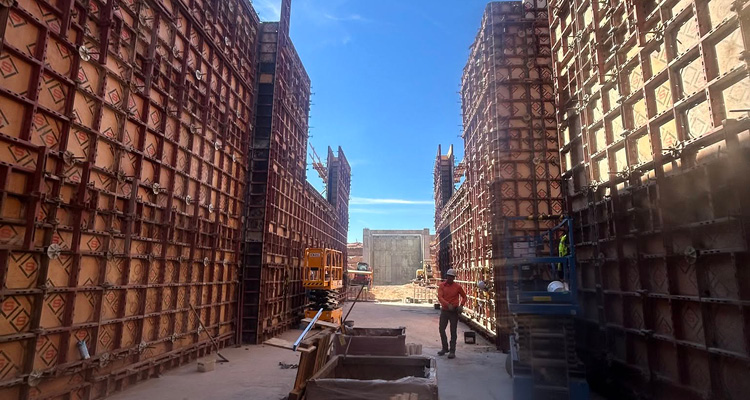
Growth often shows where an industry is headed. At Carroll Construction Supply (Carroll), you can see this in the rise of data center construction, the growing demand for rebar fabrication, and the new technologies already reshaping how products move through the supply chain. Even after one of the most successful periods in its history, this employee-owned distributor keeps its eyes on what’s next.
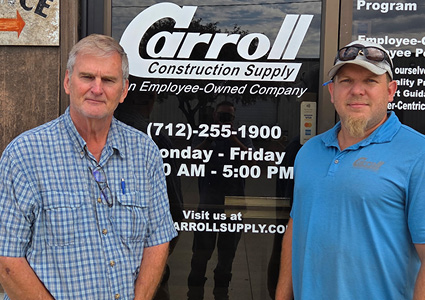
For Tom Verzani, Director of Purchasing, the challenge isn’t just keeping products moving through Carroll’s supply chain. He’s always thinking about where demand, technology, and the industry itself are headed. Tom handles supplier relationships, inventory, procurement strategy, and product availability throughout Carroll’s expanding operations. As projects get bigger and customers’ expectations climb, these responsibilities matter more than ever. That mindset fits a company built on adapting to new markets and new ways of working. “One of the most important things I learned in college was this advice: ‘Read periodicals. Make sure that you’re staying on top of what’s changing in your industry. Whatever it is you want to do, you need to be staying on top of that.’”
Organic growth
Carroll’s expansion shows a willingness to adapt as construction demand shifts. The company started in Iowa in the 1950s as a small local supplier and scaled up into a multi-state distributor serving contractors, builders, and infrastructure projects. Today, Carroll offers everything from concrete forming systems and equipment rentals to rebar fabrication and job-site supplies. As Carroll has entered new markets, it’s progressed with its customers. “Everything’s going to change and evolve. Our industry is showing that right now with AI.” Across the country, construction and industrial businesses face new technologies, labor changes, and shifting project demand all at once.
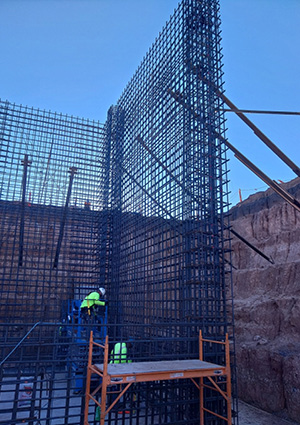
“Our rebar fabrication has been growing rapidly. Data centers have been a big boom for most of us on the construction supply side,” Tom notes. The demand for data centers is driving the need for concrete and reinforcing products across the entire supply chain. For Carroll, these projects have fueled expansion and highlighted the importance of robust procurement, fabrication, and distribution systems in supporting complex construction programs.
“We’ve kept growing thanks to more locations, better sales training, and stronger communication throughout the company.” Growth isn’t limited to existing markets. Carroll recently entered Wisconsin and added new locations in Pennsylvania. “We’re always searching for new places to expand and new markets to open.”
Family first
As Carroll’s footprint expands, keeping its culture strong matters as much as opening new branches. One challenge of expansion is holding onto the values that built the company in the first place. Several years ago, Carroll adopted an Employee Stock Ownership Plan (ESOP), tying company performance to employee success. Tom views this as part of a bigger philosophy. “Our owner, Steve Carroll, believes employees are the company’s true value. Making Carroll an ESOP – a company owned by its people – means employees can look forward to a comfortable retirement without extra out-of-pocket savings.”
For Tom, the ESOP’s value isn’t just in the numbers; it’s about what it means for employees in the long run. For him, retention really means trust. “The company is flexible and goes out of its way to make people feel welcome. If a family emergency comes up, they want you to take care of what matters at home. Steve values families and partnerships. If your kids have a sporting event, a musical, or a holiday show, he wants you there.”
That same trust extends to how Carroll approaches new technology. While many talk about AI’s future, Carroll focuses on putting it to work now. “We’re just getting started. We’re working to integrate as much AI as we can, but it’s a slow process. It needs to work with our ERP system, and we all must learn how to use it because it does things we’re not used to.”
Carroll puts equal weight on learning and on the technology itself. New tools can boost visibility, streamline processes, and support smart decisions, but only when people know how to use them. That’s why Tom prefers measured adoption over change for its own sake. Still, Tom sees more change ahead on the floor. “I hope we’ll get more efficient at ordering, sales, and deliveries. I expect to see more automation in many areas.”
A forward-thinking approach shapes how Carroll watches the broader market. Interest rates, construction activity, and economic trends matter because they directly impact demand across every market Carroll serves. “We have to keep an eye on interest rates; they shape what gets built in the US.”
It’s tough to predict how fast things will change, but Tom doesn’t expect the industry to stand still. Carroll keeps expanding, embracing new technology, and exploring fresh markets. Through it all, Carroll’s focus is on staying ahead of change, not just reacting to it. “I see those changes coming. How soon? Not sure!” Tom says.