
BMO is reimagining financial centers to deliver trusted advice and deeper client relationships
BMO Financial Group is one of North America’s largest and most established financial institutions, with a history dating back to 1817. As the eighth-largest bank in North America by assets, BMO serves approximately 13 million customers through a diversified portfolio of banking, wealth management, capital markets, and investment banking services. Driven by its purpose to ‘Boldly Grow the Good in business and life’, the bank plays a significant role in supporting individuals, businesses, and communities across the continent.
“I’m responsible for our branch and ATM network strategy across North America, leading the long-term planning and growth of our physical presence,” begins Roy Stanjevich, Head of North American Physical Channels. “Over the course of my banking career, I’ve had the opportunity to work in a wide range of roles, which has given me a deep understanding of the client experience and the realities of serving customers on the front lines. In the almost ten years I’ve been with BMO, I’ve occupied a variety of interesting roles, and these experiences continue to shape how I approach my work today.
“My team focuses on expanding and optimizing our branch network in both the US and Canada, working closely with partners across corporate real estate, marketing, technology, and other groups to ensure we have the right presence in the right markets. Our goal is to create welcoming environments where clients feel comfortable seeking advice and support, while positioning the business for sustainable growth and the opportunity to serve more customers over time.
“When it comes to deciding where to invest and expand, we consider a range of factors,” he continues. “Economic conditions and growth opportunities are key, but we also pay close attention to demographic trends, including population growth and migration patterns, to ensure we’re located where our clients need us most. Convenience is critical, so we look to establish a presence in strong retail hubs and high-traffic areas where customers are already meeting their day-to-day needs. Ultimately, it’s about making banking accessible and ensuring clients can easily access the advice and services they’re looking for.”
The 2023 acquisition of Bank of the West was a significant accelerator for BMO’s growth in the US. It immediately provided greater scale across the western region, particularly in California, while also giving valuable insight into the markets and communities it serves.
“Beyond expanding our footprint, the acquisition helped us better understand the needs of clients in those markets, including the unique characteristics and dynamics that influence how people bank and what they expect from their financial institution,” shares Stanjevich, who is also an executive at the Bank.
“When we think about adding new financial centers or modernizing our existing network, design is a key part of the process. Client needs have become more complex over time, so the role of the financial center has also evolved. While many day-to-day transactions are now handled through digital and self-serve channels, clients increasingly come in for advice, guidance, and support on more complex financial decisions.”
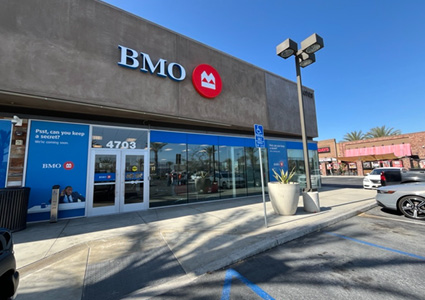
California is a cornerstone of BMO’s growth strategy and represents one of the bank’s most significant opportunities for expansion in the US. BMO is focused on strengthening its presence across the state by deepening its footprint in established markets while also expanding into communities where its presence has historically been more limited.
“Whether they’re managing everyday banking needs or making more complex financial decisions, we want to be there to help individuals, families, and businesses achieve their goals through meaningful, face-to-face conversations,” Stanjevich elaborates.
“Growth isn’t just about opening new locations; it’s also about continuing to invest in the network we already have. For us, expansion and modernization are equally important and work hand in hand. New financial centers allow us to extend our presence into new markets, build greater density in existing ones, and reach more clients. At the same time, renovating and upgrading existing locations helps ensure we’re meeting evolving customer expectations and creating the best possible experience for both clients and employees.

“We don’t see these as competing priorities. They’re complementary parts of the same strategy: growing our footprint where there is opportunity while reinvesting in our existing network to keep it relevant, accessible, and positioned for the future.
“That’s also why we refer to our locations as financial centers rather than branches. These spaces are about much more than transactions. They’re places where clients can sit down with a banker or advisor, have meaningful conversations about their financial goals, and receive the guidance they need. As banking continues to evolve, that advice-led, relationship-focused experience remains a critical part of how we serve our clients.”
In terms of technology integration, the aim is to enhance the in-person client experience, not replace it. Technology equips advisors and bankers with the tools they need to have more effective, informed conversations, and can also help raise awareness of offerings and local community activity within financial centers.
“Clients are increasingly comfortable handling many routine needs through digital channels on their own,” Stanjevich adds. “That means when they do come into a financial center, it’s often for more complex questions where in-person advice really matters. By integrating technology into the physical experience, we can create a seamless journey for clients, supporting them digitally where it makes sense, and ensuring that when they engage with us face-to-face, the experience is smooth, informed, and valuable.
“A key part of our focus is ensuring there is a clear and consistent understanding of our strategy and vision across both internal teams and external partners,” Stanjevich continues. “It’s very much a collaborative effort, drawing on the expertise of different groups to build a shared view of the client experience and the outcomes we’re working toward.
“That alignment doesn’t mean uniformity without discussion. We actively encourage collaboration, constructive challenge, and open dialogue to make sure we’re arriving at the strongest possible strategy. While there are nuances in how we approach different locations, we remain consistent in delivering on the overall brand and what clients can expect when they walk into a BMO financial center.
“That same approach extends internally as well. Strong execution depends on creating an environment where teams are working together, contributing to the thinking, and aligned around the strategy. It’s a leadership style rooted in partnership, bringing people together across functions to deliver on our long-term objectives.”
Looking ahead, Stanjevich believes financial centers will continue to play an important role over the next five-to-ten years. While they will likely become less transactional, the need for face-to-face interaction will remain. That aspect of banking is not going away.
“As client expectations evolve, financial centers will continue to adapt in both design and function to better support those advice-led conversations. Flexibility will be key; ensuring we can adjust our approach as needs change while maintaining a strong, consistent presence focused on delivering advice.
“Ultimately, the value of financial centers lies in the relationships they enable. Clients want to sit down with someone they trust and have meaningful conversations about their financial future,” Stanjevich concludes. “If anything, that demand for personal connection has only grown stronger.”