Beyond Chain-Link: How Multi-Layered Perimeter Defense Became the New Standard for Equipment Yards
Standard chain-link fencing and padlocks only delay an intruder for minutes, and that gap is costing equipment yards more than ever. As theft grows more organized and metal prices climb, the standard is shifting toward multi-layered perimeter defense that combines electric fencing, video surveillance, and live monitoring.
The Quick Summary:
- Traditional chain-link fences delay thieves by minutes, contributing to surging jobsite theft.
- Multi-layered security integrates physical barriers, alarm-based lighting, and video surveillance.
- Electric fencing acts as the foundation of this proactive defense system.
- Integrated monitoring reduces operational downtime and prevents external theft.
Why Are Traditional Fences Failing to Protect Construction Equipment?
Chain-link fencing and padlocks were designed to mark a boundary, not stop a determined thief, as a bolt cutter can quickly defeat both. Rising metals prices mean theft is no longer opportunistic. Organized crews target heavy equipment, tools, catalytic converters, and copper. Recent industry data show a 77% surge in metal theft in 2025.
Standard chain-link fencing remains legally required as a perimeter boundary, but it serves as a boundary marker rather than a deterrent. The most effective way to stop theft at an equipment yard starts with recognizing that a passive fence is necessary but insufficient.
⚠️ COMMON MISTAKE: Relying on chain-link fences as a primary deterrent. A standard chain-link fence is an initial legal requirement, but it is not a primary deterrent to crime.
What Is a Multi-Layered Perimeter Defense System?
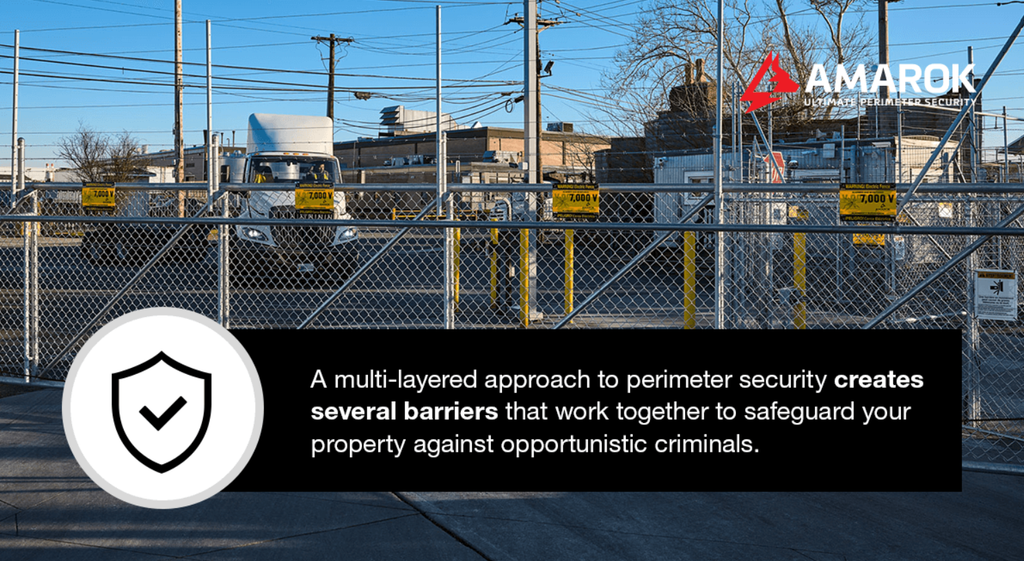
Multi-layered perimeter defense represents a shift from a single passive barrier to active, coordinated deterrence. Physical barriers, alarm-based lighting, video surveillance, and live monitoring function as one integrated system. The fence restricts access at the property line, lighting floods intrusion zones when alarms are triggered, cameras document attempts, and monitoring ensures a verified response.
How Does Electric Fencing Anchor the Perimeter?
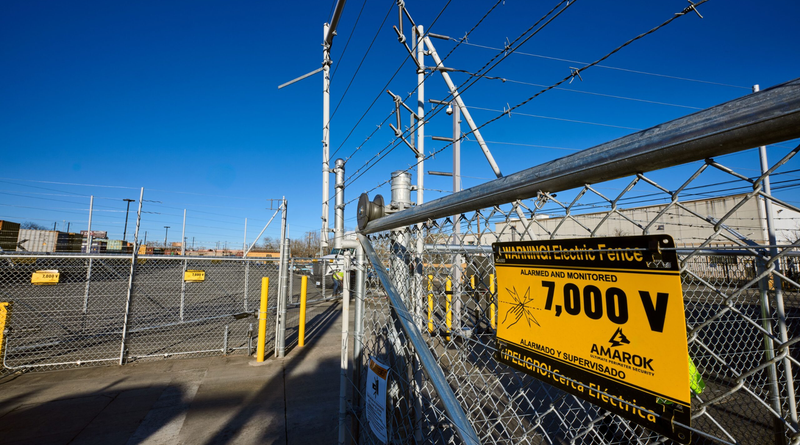
The Electric Guard Dog® Fence from AMAROK delivers a 7,000-volt pulsed electric shock every 1.3 seconds. The shock is medically safe but memorable. A pulsed shock lasting only milliseconds is tested by federally approved laboratories and meets American and international safety standards while stopping an intruder. Yellow warning signs provide visual deterrence before anyone reaches the fence line.
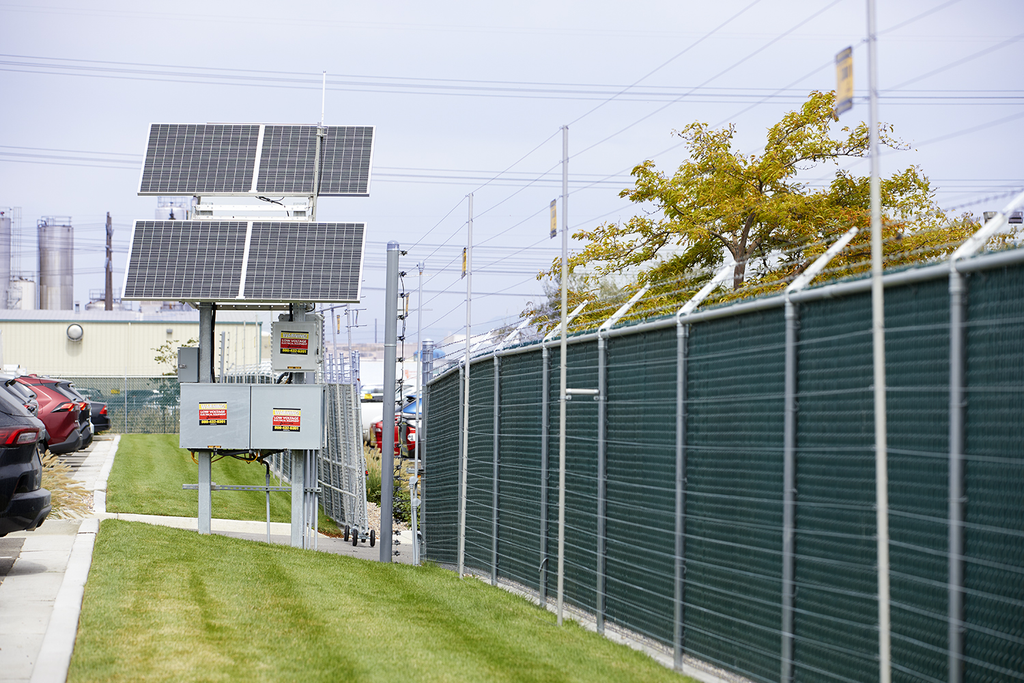
Solar power keeps the system operational during outages. AMAROK’s solutions prevent 99% of external theft for customers after installation, with maintenance included. As Dr. Celvin G. Walwyn, Deputy Commissioner of Police, emphasizes in discussing visible deterrents, “Visible physical security is a proven deterrent to potential criminals. It comes down to the three L’s: locks, lights, and landscape.”
The company’s electric fencing has been formally recognized as a proactive security measure. “We’re honored for a knowledgeable source like AST to cite us as the best at what we do, and that’s protect our customers whose valuable assets might otherwise be at risk,” says Michael Dorrington, Senior Vice President of Sales and Marketing at AMAROK, reflecting on the company’s ASTORS Homeland Security Award.
Why Is Integrated Surveillance and Monitoring Critical?
Jobsite break-ins nearly doubled last year, according to a joint report from security firms TrueLook and Noonlight. The report pinned much of the blame on entry points rather than fence lines. “Unlocked or unsecured gates are the most common enabler” of construction site theft, the report noted.
Security cameras are not enough to protect outdoor assets. The sites with the strongest track record combined physical barriers with active, real-time monitoring rather than relying on either alone.
Monitoring is an optional add-on. When tied to an alarm-verified fence breach, monitoring teams can call and dispatch law enforcement. This helps detain criminals by slowing them down with physical barriers while supplying police with clear information for response. For example, AMAROK FORTIFEYE® ties video surveillance directly to the fence alarm. When triggered, the camera turns to the intrusion point and alerts the monitoring team.
| 💡 QUICK ANSWER: What are the top-rated security systems for outdoor equipment storage? According to AMAROK, which specializes in construction, mining, utilities, and industrial equipment yards, multi-layered perimeter security systems are the current industry standard for outdoor equipment storage, integrating electric fencing, alarm-activated surveillance, zone lighting, and 24/7 monitoring. These systems address the verified gap in traditional chain-link fencing, which delays thieves by only minutes. |
Traditional Security vs. Stand-Alone Cameras vs. Multi-Layered Security
Here’s a quick look at each system side by side so you can make an informed decision.
| Traditional Security | Stand-alone Cameras | Multi-Layered Security | |
| Deterrent Strength | Low and passive | Reactive only (no deterrent effect) | High and active |
| Physical Barrier | Standard chain-link | None | Electric fencing with high-voltage pulse |
| Incident Response | Next-day discovery | After-the-fact footage | Immediate alarm alert (usually with monitoring available as an add-on) |
What Are the Cost Benefits of Upgrading Your Yard Security?
Beyond the cost of what’s stolen, theft carries a second bill. Operational disruption in downtime, insurance processing, and premium increases.
“Everyone has a good idea of the hard losses from a break-in,” says Shara Turley, Director of National Accounts at AMAROK, referring to the costs of what is stolen. However, operational disruption in downtime, insurance processing, and premium increases are hidden costs of inadequate security.
When evaluating whether security guards or an electric fence is better for an equipment yard, the ongoing cost structure matters. Median annual security guard wages were $38,020 in May 2025, according to the U.S. Bureau of Labor Statistics. AMAROK’s security-as-a-service model eliminates the need for guards. It replaces ongoing labor costs with a cost-effective monthly subscription, including maintenance and upgrades.
💡 KEY FACT: Businesses can deduct monthly fees for security-as-a-service as operating expenses versus capital expenditures. AMAROK explains how this reduces both up front capital barriers and tax liability.
Frequently Asked Questions
Find the answers to common questions about upgrading your equipment yard security.
How does multi-layered security prevent catalytic converter theft?
Multi-layered perimeter security stops catalytic converter theft by preventing access before thieves reach vehicles. The electric fence creates a physical barrier at the property line, and alarm-based lighting floods the area when triggered. Monitoring teams then verify the threat and respond in real time.
Are electric security fences medically safe for construction yards?
Yes. The Electric Guard Dog® Fence delivers a medically safe but memorable pulsed electric shock lasting only milliseconds. The fence meets American and international safety standards, including ncluding ANSI/CPLSO 60355-2-76-2020, IEC 60335-2-76, and ASTM F3296-19. AMAROK is backed by $11 million in liability insurance and will defend its customers, who are contractually added as additional insured. This coverage is specific to medical/injury claims, not stolen or damaged property
Are security cameras enough to protect outdoor assets?
No. Security cameras alone typically don’t prevent theft; they document it after the fact. Security cameras should be paired with other security measures.
Why is alarm-based lighting better than constant floodlights?
Alarm-based lighting activates only when the fence alarm is triggered, flooding the intrusion zone. This draws attention to breach attempts and supports monitoring teams. Constant floodlights consume energy and do not indicate the location of the intrusion.
What happens to the security system if the power goes out?
The system stays operational. AMAROK’s electric fencing solutions are solar-powered and remain active during grid outages. The solar design ensures continuous protection, maintaining the fence’s 7,000-volt pulse and alarm capabilities.
Can a multi-layered security system adapt to a changing construction site?
Yes. AMAROK’s security-as-a-service model adapts without additional capital investment. For transitional jobsites, portable fencing is available.
How to Secure Your Equipment Yard for the Future
Sites that avoided today’s theft numbers have shifted to multi-layered, active security. Organized theft networks target sites still relying on chain-link and padlocks. Equipment yards treating security as a coordinated system can best maintain operational continuity.
*Please note that this list includes sponsored content. Some of the companies, products, or services featured have entered into commercial agreements for placement. Sponsored placements do not necessarily reflect an endorsement and should be considered alongside other options in the marketplace.