America’s most ambitious rail tunnel project is gathering pace
Subscribe to our free newsletter today to keep up to date with the latest construction news.
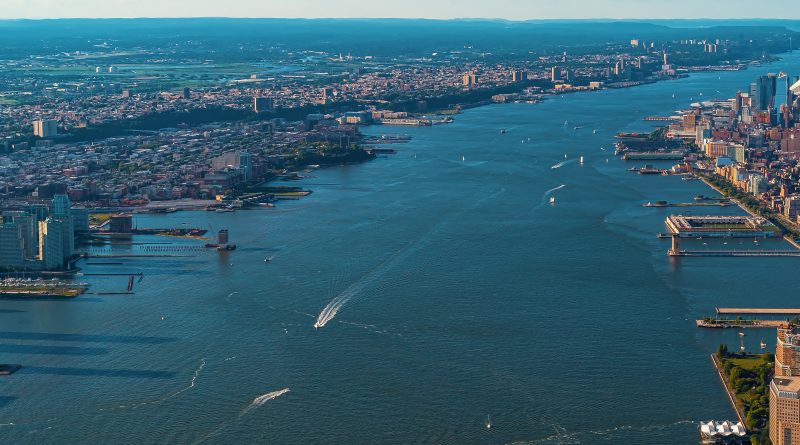
One of the most important infrastructure projects in the US is moving into a new construction phase beneath the Hudson River.
According to reporting from the Associated Press, crews working on the Gateway Program have begun assembling the massive tunnel-boring machines that will excavate new rail tunnels connecting New Jersey and Manhattan, with digging expected to begin later this year. The milestone marks another step forward for the long-delayed project, which is designed to expand capacity along the Northeast Corridor while allowing repairs to the century-old tunnels currently carrying Amtrak and NJ Transit trains into New York Penn Station.
At roughly $16 billion, the Gateway Program ranks among the largest transportation infrastructure projects underway in the US. The existing tunnels beneath the Hudson River suffered extensive saltwater damage during Superstorm Sandy in 2012 and remain one of the most vulnerable bottlenecks in the country’s busiest passenger rail corridor.
For transportation planners, the concern extends far beyond commuter delays. The Northeast Corridor links some of the most economically productive metropolitan regions in the US, carrying hundreds of thousands of passengers daily between Washington, Philadelphia, New York and Boston. A major failure inside the existing tunnels would create disruption across a large section of the national economy.
The latest construction progress also arrives after another reminder of how politically exposed large infrastructure projects remain in the US. Although the Gateway Program secured significant federal backing during the Biden administration, momentum briefly stalled earlier this year when the Trump administration froze portions of infrastructure funding during the federal government shutdown while reviewing projects tied to diversity, equity and inclusion requirements.
Although construction activity continued, the February pause reinforced how vulnerable long-term infrastructure projects remain to changing political priorities in Washington, even after years of planning and federal approval.
America’s busiest rail corridor is finally moving deeper into construction
The Gateway Program has long occupied a unique position in US infrastructure policy. Transportation officials, business groups and regional planners broadly agree the project is necessary, yet progress has repeatedly slowed under the weight of political negotiations, environmental reviews and funding uncertainty.
Supporters of the project have increasingly framed the tunnel expansion as essential economic infrastructure rather than a regional transit upgrade. The Northeast Corridor remains one of the most heavily used passenger rail systems in the world, and the Hudson River crossing is widely viewed as one of its most fragile sections.
The existing tunnels date back to the early 20th century and were never designed to handle current passenger volumes. Repairs have become increasingly urgent since Superstorm Sandy flooded both tunnels with corrosive saltwater more than a decade ago.
Yet rehabilitating the tunnels requires replacement capacity first. Closing one tunnel at a time without new infrastructure in place would create severe disruption across the regional transportation network.
That reality has turned the Gateway Program into a test case for how the US approaches infrastructure modernization in politically divided conditions. Large projects often operate across multiple presidential administrations and congressional cycles, leaving funding commitments vulnerable to changing priorities.
The temporary funding freeze earlier this year highlighted those risks again. Contractors, transit agencies and suppliers depend on long-term certainty to coordinate procurement schedules, workforce planning and construction sequencing. Even short-term interruptions can create ripple effects across projects already operating on decade-long timelines.
The engineering scale reflects a different era of construction
Once excavation begins later this year, the tunnel-boring machines are expected to spend roughly a year cutting through the first section beneath the New Jersey Palisades before work eventually advances beneath the Hudson River itself.
Modern tunnel construction operates at a scale and level of automation far removed from the techniques used to build the original tunnels more than a century ago. Rotating cutterheads grind through rock while conveyor systems remove debris behind the machines. At the same time, prefabricated concrete tunnel segments are installed during excavation to form the permanent tunnel lining as construction progresses.
The Gateway Program also reflects how infrastructure delivery has become increasingly globalized and industrialized. Large transportation projects now depend on highly specialized engineering systems, multinational supply chains and advanced manufacturing capabilities that few countries or companies fully control independently.
That complexity has reshaped the economics of public infrastructure. Megaprojects are no longer simply construction programs employing labor and raw materials. They increasingly function as industrial ecosystems requiring coordination across engineering, manufacturing, logistics and software systems simultaneously.
For policymakers, the challenge is no longer only about approving infrastructure spending. It is also about sustaining long-term institutional coordination across projects that may take more than a decade to complete.
The Gateway Program has become a broader test of US infrastructure strategy
The tunnel beneath the Hudson River is ultimately larger than a transportation project connecting New Jersey and Manhattan.
The Gateway Program has evolved into a broader test of whether the US can still execute infrastructure at the scale required by a modern economy while navigating political fragmentation, rising construction costs and lengthy regulatory timelines.
Public skepticism surrounding megaprojects remains shaped by decades of delays and budget overruns tied to major transportation developments. Boston’s Big Dig continues to influence perceptions around whether large infrastructure programs can be delivered efficiently in the US.
At the same time, pressure to modernize transportation systems continues to intensify. Passenger rail has regained economic relevance as metropolitan regions confront congestion, population growth and aging infrastructure networks.
Supporters of the Gateway Program argue the project represents more than a tunnel expansion beneath the Hudson River. They see it as a long-term investment in economic resilience across the Northeast Corridor and a signal that the US remains capable of delivering infrastructure at national scale despite political volatility.
For now, the assembly of the tunnel-boring machines offers the clearest indication yet that the Gateway Program is finally moving from planning into sustained construction reality.
The next major phase begins once excavation starts later this year.
Source